

10 Best Aquarium Plants for Beginners No CO2
Table of Contents
- What "No CO2" Really Means for Beginners
- Quick Comparison: Plant Selection by Tank Size and Light
- 1. Anubias Nana: The Foreground Standard
- 2. Java Fern: Hardy Epiphyte for Any Setup
- 3. Cryptocoryne Varieties: Low-Light Aquarium Plants That Thrive
- 4. Vallisneria Corkscrew: Fast-Growing Background Plant
- 5. Hornwort: Aquarium Plants That Grow in Gravel or Float
- 6. Amazon Sword: Centerpiece for Larger Tanks
- Frequently Asked Questions
Last Updated: October 8, 2026
What "No CO2" Really Means for Beginners
When aquarium plants for beginners no CO2 comes up, there's often confusion about what "no CO2" means. It doesn't mean zero carbon dioxide, every aquatic plant absorbs CO2 from the water column naturally. It means you're not injecting pressurized CO2 with specialized equipment.
Low-tech planted tanks rely on ambient CO2 from fish waste, decaying organic matter, and gas exchange at the water's surface.
At Ohenrystanksalot, we focus entirely on fully transitioned, hardy species cultivated without CO2 injection. Adapted to low-tech conditions from day one, they avoid the shock of moving from a high-tech greenhouse to your home tank, so our aquarium plants for beginners no CO2 arrive ready to establish quickly.
The plants below grow in gravel, low light, and standard tap water. Many even grow without substrate, tied to driftwood or rocks, flexibility that makes them ideal for your first planted aquarium.
Quick Comparison: Plant Selection by Tank Size and Light
Before diving into individual plants, here's how to match species to your setup. Tank size and light are your biggest constraints.
| Tank Size | Light Level | Best Foreground Plants | Best Background Plants | Difficulty |
|---|---|---|---|---|
| 5-10 gallons | Low | Anubias Nana, Cryptocoryne Lutea | Java Fern, Anubias Minima | Easy |
| 10-20 gallons | Low to Medium | Cryptocoryne Wendtii Red, Anubias Nana | Java Fern, Vallisneria | Easy |
| 20+ gallons | Medium | Cryptocoryne varieties, Hornwort | Amazon Sword, Vallisneria | Easy to Moderate |
| Any size | Floating preference | Frogbit, Hornwort | Hornwort (background) | Easy |
Key factors for your choice:


- Low light (under 8 hours per day or dim lighting): Stick to Anubias, Java fern, and Cryptocoryne varieties
- Medium light (8-10 hours with standard LED): Add Vallisneria, Amazon Sword, and Hygrophila
- Very small tanks (under 10 gallons): Choose foreground plants like Anubias Nana or Cryptocoryne Lutea
- Large tanks (20+ gallons): Background plants like Vallisneria and Amazon Sword fill space efficiently
Most beginners underestimate their tank's actual light. If unsure, assume low light and choose accordingly, you can upgrade to brighter species later.
1. Anubias Nana: The Foreground Standard
Anubias Nana is the single best aquarium plant for beginners no CO2 setups: nearly impossible to kill, slow-growing enough that you're not constantly trimming, and elegant in any tank style.
Reaching 3-5 inches at maturity, it works as a foreground or midground accent with deep green, ovular leaves. The key: Anubias is an epiphyte, so its rhizome must stay above the substrate, bury it and it rots within weeks.
The right way to plant it: Attach the rhizome to a piece of driftwood or stone using fishing line or a plant weight. Within a few weeks, roots will anchor it permanently.
Anubias tolerates low light beautifully and needs minimal maintenance, trimming maybe once every few months. Compatible with all fish and shrimp, it thrives for years without special care.
Aquatic plant biology and epiphytic growth patterns
From Ohenrystanksalot, Anubias Barteri var. "Nana" starts at $4.50 and arrives fully transitioned. This is our most popular beginner plant for a reason, it's the foundation of countless successful low-tech tanks.
Common mistakes:
- Burying the rhizome in gravel (causes rot)
- Placing it in high-flow areas where it gets battered
- Expecting fast growth (it's slow by design)
2. Java Fern: Hardy Epiphyte for Any Setup
Java fern is the second pillar of beginner planted tanks: an epiphyte that must be attached to hardscape, but taller and more delicate and feathery than Anubias.

At 5 inches mature, Java fern works as a background or midground plant. Its narrow, deeply lobed leaves give it a distinctive fern-like look, and it thrives in low to medium light while tolerating wide-ranging pH, temperature, and hardness.
Java fern reproduces by growing small plantlets along mature leaf edges. Harvest them once they develop tiny roots and tie them to new driftwood, one of the easiest plants for beginners to propagate.
It grows slowly enough to need little trimming, but faster than Anubias, with visible growth within a month. It's also nearly immune to algae, which rarely colonizes its texture.
From Ohenrystanksalot, Microsorum Pteropus, "Java Fern" is priced at $5.50. We ship fully transitioned specimens that establish immediately.
Why Java fern beats other background plants for beginners:
- Doesn't need substrate (attach to driftwood or rocks)
- Tolerates low light better than stem plants
- Propagates itself without effort
- Compatible with fish that uproot plants
- No special fertilizers or root tabs required
3. Cryptocoryne Varieties: Low-Light Aquarium Plants That Thrive
Cryptocoryne species are the workhorses of low-tech aquascaping: slow-growing, incredibly hardy, and varied enough to create visual depth in any tank. For aquarium plants for beginners no CO2 systems, crypts are essential.
Unlike epiphytes, crypts are rooted plants and heavy root feeders, absorbing most nutrients through their roots rather than the water column, ideal for established substrate or root tabs.
Crypts often suffer "crypt rot" when first planted as leaves melt and fall off, a normal transition phase, not failure. The plant sheds emersed leaves and grows submersed ones, stabilizing within 2-4 weeks. Buying from Ohenrystanksalot matters: our plants are already transitioned, so you skip the melting phase entirely.
Cryptocoryne Lutea
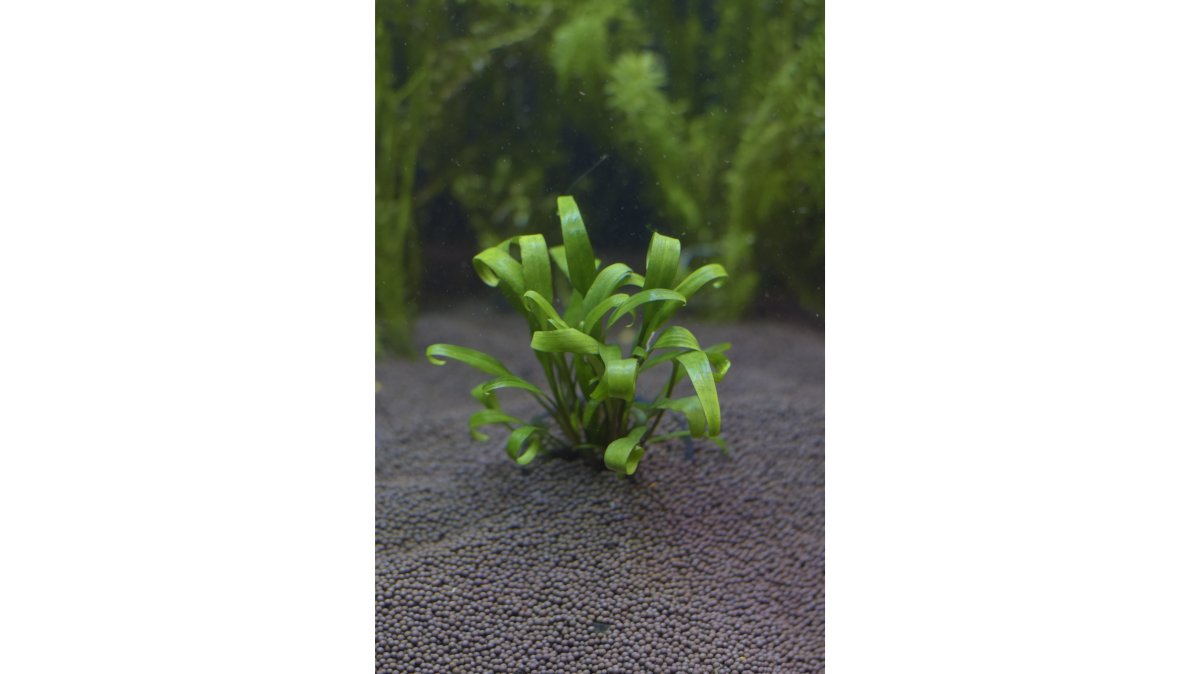
Cryptocoryne Lutea is an uncommon variety known for thin, reed-like foliage that grows mostly vertically. The leaves are deep green with thin brown stems, creating an elegant, minimalist look. At 4 inches mature size, it works as a foreground or midground plant.
Lutea is slow-growing and needs low to medium light. It prefers nutrient-rich substrate but grows in inert gravel with root tabs. As it matures, runners develop into new plants, so a single Lutea can create a small carpet-like colony.
From Ohenrystanksalot, Cryptocoryne Lutea is available at $4.00. It's one of the most affordable options for beginners looking to add variety.
Cryptocoryne Wendtii Red
Wendtii Red is a striking crypt variant with blush-colored leaves and brown stems. The leaves are long and narrow, growing laterally from the rhizome. At 6-8 inches mature size, it fits perfectly as a midground or background plant.
Hardy and tolerant of many water parameters, it forgives mistakes, inconsistent fertilization, variable light, and water chemistry changes don't stress it like other plants.
Wendtii Red is a heavy root feeder, so nutrient-rich substrate or root tabs are recommended. However, it can still grow in standard gravel if you're patient and willing to supplement.
From Ohenrystanksalot, Cryptocoryne Wendtii var. "Red" costs $4.75. This is our most popular midground plant for good reason, it's beautiful, forgiving, and affordable.
4. Vallisneria Corkscrew: Fast-Growing Background Plant
If you want visible growth and rapid tank transformation, Vallisneria Corkscrew is your answer, the fastest-growing plant on this list, yet nearly impossible to kill.
Vallisneria reaches 12-20 inches at maturity, ideal for background placement or filling large tanks. The corkscrew variety's twisted leaves create visual interest, and unlike most fast-growing stem plants it thrives in medium light with ambient CO2 alone, no injection needed.
The plant reproduces via runners, long strings that develop baby plants with their own root systems. You can propagate Vallisneria by simply planting the runners directly into gravel. Within weeks, you'll have a dense background wall of green.
Vallisneria is low-maintenance and tolerates variable water parameters, absorbing excess nutrients that would otherwise fuel algae. The only real maintenance is occasional trimming so it doesn't shade out foreground plants.
From Ohenrystanksalot, Vallisneria Americana "Corkscrew" is priced at $5.50. It's perfect for beginners who want dramatic results quickly.
Why Vallisneria works for low-tech tanks:
- Grows in medium light without CO2 injection
- Propagates itself endlessly via runners
- Tolerates soft, neutral, and hard water equally well
- Compatible with all fish and shrimp
- Requires no special fertilizers or root tabs
Freshwater aquatic plant ecology and nutrient cycling
5. Hornwort: Aquarium Plants That Grow in Gravel or Float
Hornwort is unique because it offers flexibility no other beginner plant does. You can plant it in gravel, anchor it with weights, or let it float freely. This versatility makes it invaluable for experimenting aquascapers.
Hornwort grows rapidly, up to 6 feet with good light, and its bushy, dense growth hides fish fry and shelters shrimp.
It tolerates many water parameters and even moderate salinity, making it useful in brackish setups or tanks with unstable chemistry, and nearly impossible to kill through standard care mistakes.
Here's the catch: Hornwort doesn't grow roots when planted in substrate. If you try to bury it, the buried portion rots away.
The real challenge is overgrowth: Hornwort grows so fast it shades out slower plants and consumes their nutrients. Trim every 2-3 weeks to keep it under control.
From Ohenrystanksalot, Ceratophyllum Demersum, "Hornwort" starts at $3.75. It's our most affordable plant option and works as a temporary or permanent tank addition.
6. Amazon Sword: Centerpiece for Larger Tanks
Amazon Sword is the centerpiece plant for larger beginner tanks, growing into a dense rosette of broad green leaves up to 24 inches tall.
It grows slowly compared to stem plants but faster than Anubias or Java fern, with visible growth within 3-4 weeks.
The plant tolerates low to high light, though it grows faster under medium to high light. It's not picky about water parameters and works in soft or hard water equally well.
From Ohenrystanksalot, Echinodorus Amazonicus, "Amazon Sword" is available at $5.00. It's the go-to centerpiece plant for tanks 20 gallons and larger.
Setup requirements for success:
- At least 2 inches of substrate depth
- Root tabs if substrate is inert (sand or gravel without nutrients)
- Medium to high light for optimal growth
- Space to reach full 24-inch height without shading foreground plants
Why Ohenrystanksalot for Your First Planted Tank
Success in beginner planted tanks often comes down to plant quality and transition.
Our Arrive-Alive Guarantee and 7-day Thrive Policy protect you if anything goes wrong.
When you order aquarium plants for beginners no CO2 from Ohenrystanksalot, you're not just buying plants, you're buying confidence. Shop All Plants and start your low-tech aquascape today.
Frequently Asked Questions
Do aquarium plants really grow without CO2 injection?
Yes. Plants absorb CO2 naturally from fish waste, decaying matter, and the water column itself. Low-light, slow-growing species like Anubias, Java fern, and Cryptocoryne thrive in no-CO2 tanks. Growth is slower than with injected CO2, but these hardy plants do not require special equipment to survive. Ohenrystanksalot grows all plants without CO2, so they adapt instantly to your tank.
What are the easiest aquarium plants for beginners with no CO2?
Anubias Nana ($4.50), Java Fern ($5.50), and Cryptocoryne varieties ($4.00-$4.75) are the most beginner-friendly. They tolerate low light, slow growth, and variable water conditions. Hornwort ($3.75) and Frogbit ($5.50) are also excellent for floating or unplanted setups.
Can aquarium plants grow in gravel without CO2?
Yes, but it depends on the plant. Epiphytes like Anubias and Java fern should be attached to driftwood or rocks, not buried. Root feeders like Cryptocoryne, Amazon Sword, and Hygrophila benefit from nutrient-rich substrate or root tabs in gravel. Hornwort floats or anchors loosely. Frogbit floats entirely. Most no-CO2 plants adapt to gravel if you supplement root feeders with tabs.
How do I prevent plant melt and algae in a no-CO2 tank?
Plant melt occurs when plants experience shock from sudden water parameter changes. Ohenrystanksalot's plants are fully transitioned to aquatic life, so melt risk is minimal. To prevent algae: maintain consistent lighting (8-10 hours daily), do 25% water changes weekly, trim fast-growing plants like Hygrophila and Vallisneria regularly. Avoid overfeeding fish and excess light.
What is the difference between low-tech planted tanks and high-tech CO2 systems?
Low-tech tanks skip CO2 injection, pressurized equipment, and complex dosing. Growth is slower but maintenance is simpler and costs less. High-tech tanks with CO2 support fast-growing stem plants and dense scapes but require regulators, diffusers, and fertilizer monitoring. Low-tech tanks use hardy, slow-growing plants like those in this guide and rely on fish waste for nutrients. Both work; low-tech suits beginners.