

Is Liquid Fertilizer Worth It for Aquarium Plants?
Table of Contents
- Do Aquarium Plants Need Fertilizer?
- Liquid Fertilizer vs Root Tabs: Which Delivers Better Results?
- Which Plant Types Benefit Most from Liquid Fertilizer?
- Aquarium Fertilizer Dosing Schedule: How Much and How Often?
- The Real Cost-Benefit: Is Liquid Fertilizer Worth the Investment?
- Growing Aquarium Plants Without Fertilizer: When It Works
- Algae Risk and Safety for Fish, Shrimp, and Snails
- Frequently Asked Questions
Last Updated: October 17, 2026
Do Aquarium Plants Need Fertilizer?
Most aquarium plants can survive without added fertilizer, but they won't thrive. Fish waste provides some nutrients, but usually not enough for healthy, vibrant growth. Whether is liquid fertilizer worth it for aquarium plants depends on your tank setup, plant types, and how much you want them to flourish.
Low-light tanks with easy plants like Java fern or Anubias often get by on fish waste alone. High-light tanks with demanding stem plants or carpeting species almost always need supplemental nutrients. The gap between "surviving" and "thriving" is where fertilizer makes the real difference.
At Ohenrystanksalot, we focus on plants that are grown without CO2, which means they're adapted to lower-nutrient environments. Even hardy species benefit from a basic fertilizer routine if you want lush, vibrant growth instead of slow, pale plants.
Think of it this way: fish waste is like a basic multivitamin. It keeps plants alive. Fertilizer is the full meal plan that lets them reach their potential.
Liquid Fertilizer vs Root Tabs: Which Delivers Better Results?
Liquid fertilizer and root tabs feed plants differently. Liquid fertilizer dissolves in the water column and feeds plants through their leaves and stems. Root tabs are solid pellets buried in the substrate that slowly release nutrients for root-feeding plants. Each has real strengths and real limitations.
How Liquid Fertilizers Feed Water-Column Plants
Liquid fertilizers are all-in-one solutions that dissolve directly into your tank water. They work best for stem plants, floating plants, and other species that absorb nutrients through their leaves and stems rather than roots. The nutrients are immediately available, so you see results faster than with root tabs.
The main advantage is simplicity. Dose once or twice weekly, and you're done. No digging around in the substrate. No guessing whether the tabs are still releasing nutrients after months in the tank. Liquid fertilizers also work well in tanks with frequent water changes, since root tabs can be disrupted during maintenance.
The trade-off is cost and frequency. Liquid fertilizers need regular dosing to maintain nutrient levels. You'll spend more money over time compared to a single dose of root tabs.
How Root Tabs Feed Substrate-Rooted Plants
Root tabs are solid nutrient pellets pressed into the substrate near plant roots. They're designed for plants with strong root systems, like sword plants, crypts, and larger stem plants.
Root tabs are cheaper per dose and last longer. One application can feed plants for 2-3 months. They're also better for heavily planted tanks where you want sustained, hands-off nutrient delivery. Plants with deep root systems absorb nutrients more efficiently from the substrate than from the water column.
The downside is placement. You have to bury them near plant roots, and if you move plants or do major tank work, you'll disturb the tabs. They also don't help water-column feeders like stem plants that rely on leaf absorption.
Which Plant Types Benefit Most from Liquid Fertilizer?
Stem plants, floating plants, and fast-growing species respond best to liquid fertilizer. These plants absorb nutrients primarily through their leaves and stems, not roots. Liquid fertilizer keeps the water column stocked with the macronutrients and micronutrients they need.
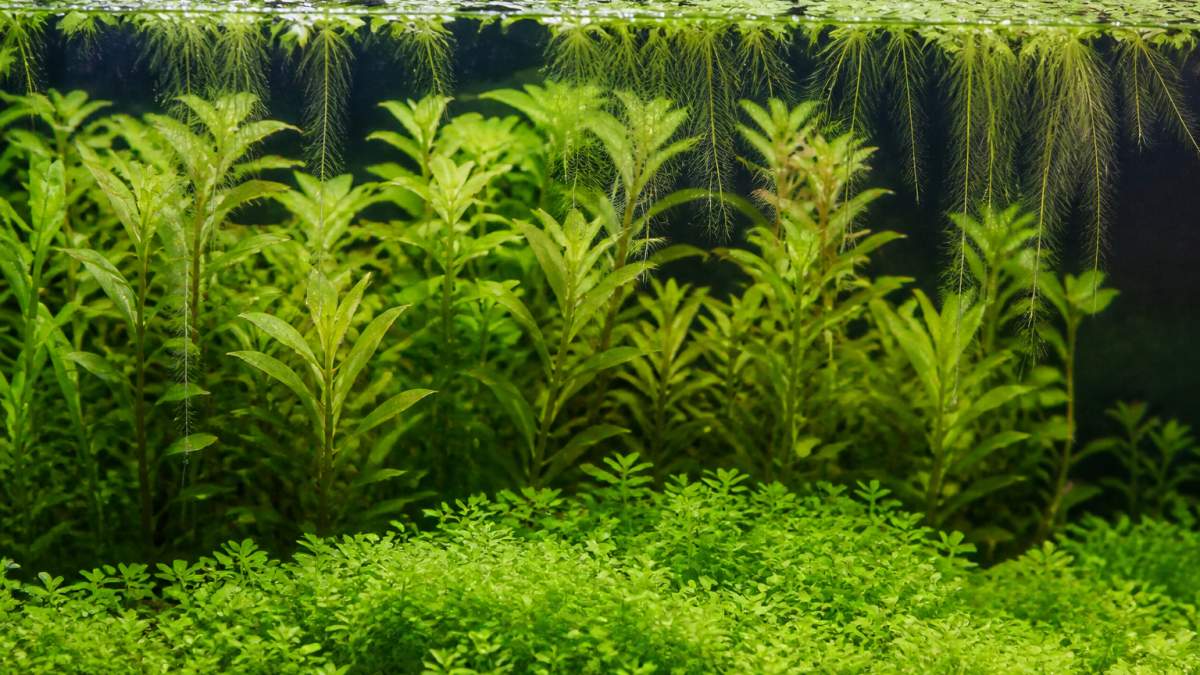
Floating plants like water sprite, frogbit, and dwarf water lettuce almost always need liquid fertilizer. They have no roots in the substrate, so root tabs are useless for them.
Carpeting plants like glossostigma and dwarf hairgrass fall into a gray area. They can use root tabs, but they also benefit from liquid fertilizer since they have shallow roots and absorb nutrients from the water column too. Many experienced aquascapers use both for fast carpet growth.
Plants like sword plants, crypts, and large anubias prefer root tabs since they develop deep, strong root systems. But if you're already dosing liquid fertilizer for stem plants, these species will still benefit from the nutrients in the water column.
Aquarium Fertilizer Dosing Schedule: How Much and How Often?
Dosing depends on your tank's light intensity, plant load, and fertilizer type. There's no universal "correct" dose because every tank is different. Start low and adjust based on how your plants respond.
Common dosing patterns:
- Low-light tanks: Dose once per week at half the bottle's recommended amount
- Medium-light tanks: Dose twice per week at the recommended amount
- High-light tanks: Dose twice per week or use a daily microdose system
- Heavily planted tanks: May need higher doses or more frequent dosing
Most liquid fertilizers suggest a baseline dose for a specific tank volume. A 20-gallon tank needs less fertilizer than a 55-gallon tank. Read the label carefully and start conservative. You can always increase the dose if plants show signs of nutrient deficiency like pale leaves or stunted growth.
Many aquascapers use a simple routine: dose on Monday and Thursday, then do a 25-30% water change on Sunday. This replenishes the water column while preventing nutrient buildup. Over time, you'll learn what your specific tank needs.
The Real Cost-Benefit: Is Liquid Fertilizer Worth the Investment?
Here's the honest answer: whether is liquid fertilizer worth it for aquarium plants depends on what you're growing and what results you want. But to decide whether liquid fertilizer is worth it, you need more than a bottle price, you need to compare ongoing cost, coverage, and results against the alternative: root tabs.
Liquid fertilizer makes sense if:
- You're growing stem plants or floating plants that need water-column nutrients
- You want fast, visible growth and vibrant colors
- You're willing to dose on a regular schedule
- Your tank has moderate to high lighting
You can skip liquid fertilizer if:
- You have a low-light tank with hardy plants like anubias, java fern, or moss
- You're okay with slow growth and pale plants
- You have a heavily planted tank with lots of fish waste
- You're using root tabs for your main plants
Cost per Month: Liquid Fertilizer vs. Root Tabs
Most all-in-one liquid fertilizers cost $10-$20 per bottle. A 500 mL bottle typically doses a 20-40 gallon tank for 1-3 months, depending on frequency. That works out to roughly $5-$10 per month for a 20-40 gallon tank. For a 55-gallon tank, expect $8-$15 per month.
Root tabs are cheaper upfront: a pack of 10-20 tabs costs $10-$20 and lasts 2-3 months per application. For a 20-gallon tank with 5-10 root-feeding plants, one pack can last 4-6 months, bringing the monthly cost to $2-$5. However, root tabs only feed plants with roots in the substrate, they do nothing for floating plants or stem plants that absorb nutrients from the water column.
The real comparison: If you grow only root feeders (swords, crypts, large anubias), root tabs are cheaper per month. If you grow stem plants, floating plants, or a mix, liquid fertilizer is the only option that feeds everything. Many aquascapers use both: root tabs for heavy root feeders and liquid fertilizer for water-column feeders.
Coverage and Results
Liquid fertilizer covers the entire water column, so every leaf and stem can absorb nutrients. Results are faster, often visible within 1-2 weeks for stem plants. Root tabs are localized; a plant must be near a tab to benefit. Results take longer (2-4 weeks) and depend on root growth.
The Hidden Cost of Skipping Fertilizer
Replacing melted or stunted plants costs more than fertilizer. A single pot of stem plants runs $5-$10, and a carpeting plant pot can be $10-$20. If fertilizer prevents even one plant loss per month, it pays for itself.
The real investment is consistency. You need to dose regularly. Skipping weeks or dosing randomly won't work. Plants thrive on routine. If you can commit to a simple weekly or twice-weekly dose, liquid fertilizer delivers measurable results.
Growing Aquarium Plants Without Fertilizer: When It Works
Some tanks genuinely don't need added fertilizer. Fish waste contains nitrogen and phosphorus, which are the main nutrients plants need. In a densely stocked tank with low plant demand, fish waste alone may be enough.
Fertilizer-free tanks work best with:
- Low-light plants like anubias, java fern, moss, and crypts
- Low plant density (a few plants scattered around)
- High fish stock relative to plant load
- Infrequent water changes (which preserves nutrient buildup)
Even in these tanks, growth will be slow. Leaves may stay smaller and paler than they would with fertilizer. New growth will come in, but it won't be the lush, vibrant plants you see in high-tech planted tanks.
Some aquascapers deliberately skip fertilizer to reduce algae growth. Without excess nutrients in the water column, algae has less fuel to thrive. This works, but it's a trade-off: you get less algae and slower plant growth at the same time.
Algae Risk and Safety for Fish, Shrimp, and Snails
Overdosing fertilizer creates excess nutrients that fuel algae blooms. This is the biggest risk most aquascapers face. Too much nitrogen or phosphorus, and suddenly you're fighting green water or algae coating every surface.
The good news is that proper dosing doesn't cause algae problems. Algae blooms usually happen when people dose too much, too frequently, or fail to do regular water changes. Follow the label dosing and maintain your water change routine, and algae risk stays low.
Algae Troubleshooting: What to Check First
If algae appears after you start fertilizing, don't blame the fertilizer immediately. Work through this checklist:
- Light duration and intensity: Most tanks need 6-8 hours of light. If you're running 10+ hours, reduce it by 1-2 hours before changing fertilizer.
- CO2 consistency: In injected CO2 tanks, fluctuating CO2 stresses plants and invites algae. Aim for a stable drop checker reading (green) during the photoperiod.
- Plant mass: A lightly planted tank with high fertilizer dosing is an algae invitation. Either increase plant density or reduce dosing.
- Water changes: Skipping water changes allows nutrients to accumulate. A 25-30% weekly water change is a common baseline.
- Fertilizer dose: If all else is stable, reduce fertilizer by 25-50% for two weeks and observe.
A common pattern: algae appears because light is too strong for the plant mass, not because fertilizer is too high. Fix the light or add plants before cutting fertilizer.
Safety for Shrimp and Snails
Most liquid fertilizers are safe for shrimp and snails when dosed as directed. However, some contain copper as a micronutrient, which is toxic to shrimp at high concentrations. Always check the label. If you keep shrimp, look for copper-free formulas or dose at lower rates.
Sensitive species like Amano shrimp or bee shrimp are more vulnerable than hardier shrimp. When in doubt, dose at half strength and monitor your livestock for signs of stress like lethargy or color loss.
Snails are generally more tolerant of copper than shrimp, but sensitive species like nerites can still be affected. If you keep snails, avoid fertilizers with high copper levels and maintain consistent water parameters.
Safety for Fish
Fish are generally unaffected by standard aquarium fertilizer doses. The nutrients don't harm them directly. The real danger is algae blooms from overdosing, which can crash water quality and stress fish indirectly.
Frequently Asked Questions
Do aquarium plants need liquid fertilizer?
Not always. Fish waste provides some nutrients, and many hardy plants survive in established tanks without supplemental fertilizer. However, plants in low-bioload tanks, high-light setups, or those with heavy plant populations often show faster growth and better health with liquid fertilizer. Stem plants and carpeting species are especially responsive to supplemental nutrients.
Is liquid fertilizer safe for fish, shrimp, and snails?
Quality liquid fertilizers are safe when dosed correctly. Most formulations contain only macronutrients and micronutrients already present in fish waste. Overdosing, however, can spike nutrient levels and trigger algae blooms, which indirectly harms livestock. Follow the dosing schedule on the bottle and perform regular water changes to maintain balance.
How often should you add liquid fertilizer to an aquarium?
Most liquid fertilizers are dosed 2-3 times per week, with dosing amounts based on tank volume and plant demand. Start with the manufacturer's recommended dose and adjust based on plant growth and algae development. Water changes dilute nutrients, so timing doses after partial water changes maximizes effectiveness.
Can liquid fertilizer cause algae growth?
Excess nutrients, especially nitrogen and phosphorus, promote algae growth. The risk increases in tanks with low light intensity or poor water circulation. Prevent algae by maintaining a balance between nutrients, light, and CO2 availability. Regular water changes (25-50% weekly) remove excess nutrients and keep algae in check.