

How to Ship Aquatic Plants Safely: A Complete Guide
Table of Contents
- Why Shipping Aquatic Plants Requires Special Care
- How to Pack Aquarium Plants for Shipping: Step-by-Step
- How Long Can Aquatic Plants Survive in a Bag During Transit
- Best Temperature for Shipping Aquarium Plants
- How to Acclimate Shipped Aquarium Plants After Arrival
- Troubleshooting Damaged or Delayed Shipments
- Choosing the Right Carrier and Service Level for Plant Shipments
- Frequently Asked Questions
Last Updated: October 21, 2026
Why Shipping Aquatic Plants Requires Special Care
Aquatic plants are living organisms that need moisture, temperature stability, and protection from physical damage during transit. In a box for days, they face dehydration, temperature swings, and crushing forces, and getting it wrong means dead or severely damaged plants.
At Ohenrystanksalot, we know how to ship aquatic plants safely, requiring a completely different approach than shipping other merchandise. A plant that arrives in poor condition won't recover, costing your customer money and trust.
The good news: it's preventable. With the right packing method, you can ship aquatic plants safely and most survive multi-day shipments without issue.
How to Pack Aquarium Plants for Shipping: Step-by-Step
Packing aquatic plants for shipping follows a logical sequence: prep the plant, match the method to the plant type, control moisture, add crush protection, and seal a sturdy box. The biggest mistake is using one method for every plant, floaters, stems, rhizomes, and bare-root plants have different moisture and airflow needs, and packing them alike is how shipments arrive rotted or desiccated.
Step 1: Prepare Plants Before Packing
Healthy plants ship better than weak ones. Remove decaying leaves, trim dead stems, and rinse gently under lukewarm water. Check for snails, eggs, algae, and pest larvae, a single egg cluster can hatch into a problem during transit, so quarantine or treat anything suspicious first.
Let plants drain 5-10 minutes after rinsing, moist, not dripping. Excess water adds weight, promotes rot, and can leak through the box and damage the shipping label.
Step 2: Match the Packing Method to the Plant Type
This is where most guides stop short. Use the method below for each plant type.
Floating plants (duckweed, salvinia, frogbit, red root floaters). Floaters ship best slightly damp, not submerged.
Stem plants (rotala, ludwigia, bacopa, hornwort). Bundle 5-10 stems, wrap the cut ends in a damp paper towel, and bag with foliage mostly dry.
Rhizome plants (anubias, java fern, bucephalandra). Ship bare-root or attached to a small piece of rock or driftwood.
Step 3: Control Moisture and Prevent Leaks
Moisture control is the difference between a turgid plant and slime. Aim for damp, never dripping, a paper towel should feel like a wrung-out sponge.
Double-bag anything with visible water: place the plant bag inside a second bag, twist and tie the top, then fold the tied end under.
Do not seal bags completely airtight for shipments longer than 48 hours. Leave a small air pocket or a pinhole so the plant can exchange gas. A fully sealed, wet bag creates anaerobic conditions that rot roots and stems.
Step 4: Protect Plants from Crushing and Movement
Crushing is one of the biggest transit threats. Build corrugated cardboard compartments so each plant or bundle has its own space, sitting snugly but not squeezed.
Wrap each compartment in bubble wrap or kraft paper for cushioning. Keep floaters and stem bundles separated from heavier potted plants so the heavier items don't compress the lighter ones.
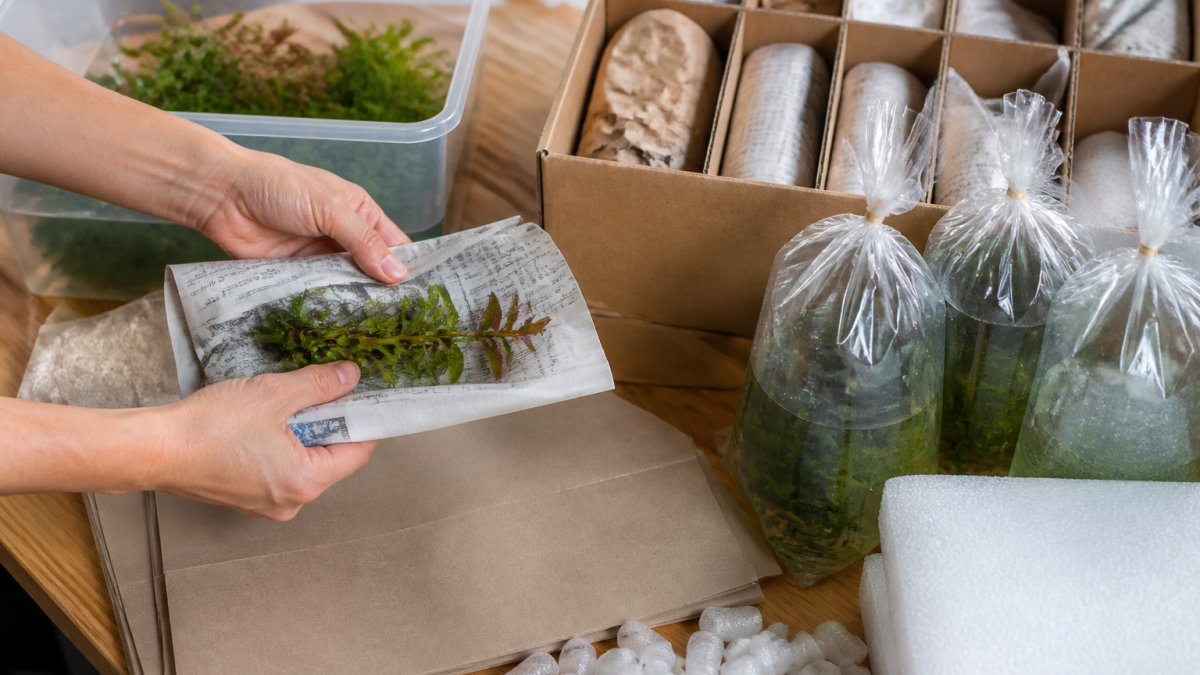
Step 5: Pack Into a Sturdy Corrugated Box
Use a corrugated box rated for shipping. Line the bottom with 2-3 inches of packing peanuts or crumpled kraft paper, arrange dividers and plants on top, fill gaps, and add a top layer before sealing. The box should feel full but not overstuffed.
Seal all seams with strong packing tape. Label the box "LIVE PLANTS, FRAGILE" and add an up arrow. Keep the box out of direct sun and off hot pavement before pickup, a box that sits in a hot truck bed before it ever reaches the carrier can cook the plants before transit begins.
How Long Can Aquatic Plants Survive in a Bag During Transit
Most aquatic plants survive 5-7 days sealed in a bag with proper moisture and temperature control. Floaters last up to 10 days, and rooted plants with soil hold up better than bare-root stems.
Oxygen availability is the key factor. Sealed bags create a limited oxygen environment; plants produce some through photosynthesis, but levels drop after 48 hours, which is why transit time matters so much.
For shipments longer than 5 days, avoid complete sealing. Use partially sealed bags that allow minimal air exchange. This keeps moisture in while letting plants breathe.
Temperature matters too: in cool conditions (50-70°F), plants use less oxygen and survive longer; above 75°F, they consume oxygen faster and deteriorate quicker.
Best Temperature for Shipping Aquarium Plants
The ideal shipping range is 50-70°F, which slows metabolism, reduces oxygen demand, and prevents heat stress.
Below 50°F, plants enter dormancy and stop growing, survivable, and fine for short transit.
Above 75°F, metabolism accelerates: plants consume oxygen faster, are more prone to rot and mold, and evaporation inside sealed bags can dry out foliage.
Extreme heat above 85°F causes plant cells to break down. Leaves turn mushy and brown. Recovery is difficult even after acclimation.
Extreme cold below 40°F damages cell structure in tropical plants. They may appear fine initially but die within days of arrival.
Seasonal Shipping Decisions and Heat/Cold Packs
Summer shipping (June-August) needs insulated boxes and cold packs to keep temperatures below 75°F, plus expedited service to cut transit time.
Winter shipping (December-February) requires chemical heat packs designed for live animals, which hold warmth 24-48 hours. Place them outside the plant compartments so they warm the air without direct contact.
Spring and fall are ideal shipping seasons. Moderate temperatures mean less intervention is needed.
For extreme heat regions, consider only shipping plants during cooler months. A 3-4 day transit in 115°F heat will kill most aquatic plants regardless of insulation.
How to Acclimate Shipped Aquarium Plants After Arrival
Acclimation gradually adjusts shipped plants to their new tank. Skip it and plants go into shock.
Remove plants from packaging immediately on arrival and check for damage.
Rinse gently under lukewarm water to remove debris and packing material, which also rehydrates foliage that dried in transit.
Let them sit 2-4 hours to rehydrate and begin adjusting to the new water chemistry.
For plants that arrived in poor condition (brown leaves, mushy stems), give them 24 hours in the holding container before planting.
Troubleshooting Damaged or Delayed Shipments
Plants that arrive brown or mushy aren't necessarily dead, many recover with proper care.
Remove visibly dead or decaying leaves immediately; they won't recover and will rot, degrading water quality.
Plant the remaining stems or roots as normal, in lower light for the first week, strong lighting stresses already-damaged plants.
Do water changes every 2-3 days for the first week to help the plant rebuild.
Most damaged plants show new green growth within 7-10 days; if none appears after 14 days, the plant is unlikely to recover.
For shipments delayed beyond 7 days, plants may arrive dried out.
Choosing the Right Carrier and Service Level for Plant Shipments
Transit time is the most controllable variable in plant survival, every extra day raises oxygen depletion, temperature exposure, and handling risk. Match service level to season, distance, and plant type rather than defaulting to the cheapest option.
Transit Time Benchmarks
Most aquatic plants tolerate 2-4 days in transit when packed correctly. Beyond 5 days, survival drops sharply for stem plants and bare-root rosettes, while floaters and hardy rhizomes hold up longer. Use these benchmarks:
- Overnight (1 business day): Best for high-value plants, tropical species, and any shipment into extreme heat or cold. Highest cost, highest survival.
- 2-day service: A reasonable default for most plants in moderate seasons when distance is under roughly 1,500 miles.
- 3-day service: Acceptable for floaters, anubias, java fern, and other hardy plants in spring and fall. Risky in summer and winter.
- Ground (4-7 days): Avoid for live plants. A 5-7 day ground transit in warm months means near-certain damage.
Carrier Options and Trade-offs
FedEx and UPS both offer overnight and 2-day services and accept live plant shipments, classified differently from dry goods. FedEx overnight is generally fastest door-to-door for coastal-to-coastal shipments; UPS has a denser drop-off and pickup network, which helps without daily carrier pickup. USPS Priority Mail Express is the lowest-cost expedited option for small, light boxes, but its 1-2 day window is less predictable, reserve it for short distances where delivery lands within 2 days.
Ask each carrier about climate-controlled or temperature-protected service for live shipments. It costs more but materially improves survival during extreme seasons.
Weekend and Cutoff Mechanics
A shipment that misses a Friday cutoff can sit in a facility over the weekend, adding 2 days of uncontrolled temperature exposure. Plan around these rules:
- Ship early in the week (Monday-Tuesday) so the package doesn't sit over a weekend if it's delayed.
- Confirm the carrier's cutoff time for your service level, overnight cutoffs are often early afternoon, not end of day.
- Avoid shipping Thursday or Friday into a weekend unless you're using Saturday delivery, which most carriers charge extra for.
- Check for federal holidays in the delivery window; a holiday can add a day with no tracking movement.
Matching Service Level to Season and Distance
Use a simple decision rule:
- Summer (above 85°F destination highs): Overnight only, with cold packs and an insulated box. Two-day service into a hot climate is too risky.
- Winter (below 40°F destination lows): Overnight or 2-day with a heat pack rated for the transit window. Ground shipping in freezing weather is not viable.
- Spring and fall: 2-day service is usually sufficient for most plant types; 3-day is acceptable for hardy species over shorter distances.
- Hot-climate destinations (Arizona, Texas, Southern California, Florida) in summer: Overnight with cold packs, regardless of origin.
When Ohenrystanksalot ships plants, we use insulated boxes with cold or heat packs depending on season and prioritize overnight delivery whenever possible.
Frequently Asked Questions
How long can aquatic plants survive in a bag during shipping?
Most rooted aquatic plants can survive 3-5 days in a sealed, damp bag without water circulation. Floating plants may tolerate slightly shorter periods. Survival depends on temperature stability, moisture retention, and oxygen levels inside the bag. Damp newspaper or paper towel keeps foliage hydrated, while sealed bags trap humidity. Faster transit times reduce stress and improve arrival quality significantly.
What is the best temperature for shipping aquarium plants?
Aquatic plants ship best between 60-75°F. Temperatures below 50°F slow metabolism and increase shock risk, while heat above 80°F accelerates respiration and depletes oxygen in sealed containers. During cold weather, heat packs maintain warmth throughout transit. In summer, cold packs or overnight delivery prevent overheating. Insulated boxes with appropriate temperature control packs ensure plants arrive in stable conditions.
How do I acclimate shipped aquarium plants after they arrive?
Remove plants from packaging as soon as possible and rinse gently in lukewarm water to remove shipping debris and excess moisture. Place them in a separate container with water from your aquarium for 30 minutes to allow osmotic adjustment before planting. This gradual acclimation prevents shock and plant melt. If foliage appears wilted, mist with water and allow recovery time before final placement in the tank.
What should I do if my shipped aquatic plants arrive damaged or delayed?
Document damage with photos immediately upon delivery. Contact the seller within 24 hours with images and details about the shipment delay or condition. Reputable sellers like Ohenrystanksalot offer Arrive-Alive guarantees and replacement policies. Keep the original packaging and damaged plants until the seller provides instructions.