

Why Are My Aquarium Plants Dying: A Troubleshooting Guide
Table of Contents
- Why Are My Aquarium Plants Dying: Common Causes
- How to Revive Dying Aquarium Plants: Step-by-Step Process
- Aquarium Plants Turning Yellow: Causes and Solutions
- Aquarium Plants Melting After Planting: Prevention and Recovery
- Aquarium Lighting for Live Plants: Getting It Right
- Root Tabs, CO2, and Nutrient Management
- Plant-Specific Care: Epiphytes vs. Root Feeders
- Recovery Timeline and When to Remove Damaged Growth
- Frequently Asked Questions
Last Updated: October 6, 2026
Why Are My Aquarium Plants Dying: Common Causes
Aquarium plants dying is one of the most frustrating problems hobbyists face. You buy healthy plants, place them in your tank, and within days or weeks they start to decline. The leaves yellow. Growth stalls. Sometimes the entire plant melts away. But here's what most guides miss: the cause usually isn't a mystery. It's one of a handful of specific problems that are easy to fix once you know what to look for.
The key is learning to diagnose what's actually happening in your tank so you can address it directly.
Buried Rhizomes and Planting Depth Mistakes
One of the most common reasons aquarium plants dying happens is improper planting depth. Certain plants, called epiphytes, have rhizomes that must never be buried in substrate.
Epiphytes include anubias, java ferns, and similar species. Their rhizomes are the thick horizontal stem that runs along the surface. Roots grow downward from the rhizome, and leaves grow upward.

The fix is simple: attach epiphytes to hardscape instead. Use fishing line or plant weights to secure them to driftwood or rock.
Root feeders work differently. Plants like crypts and sword plants pull nutrients from the substrate through their roots.
Insufficient Light Levels
Light is the fuel that powers plant growth. Without enough light, photosynthesis slows. The plant can't produce the energy it needs to grow and repair itself. Growth stops. Leaves weaken. The plant declines.
Most aquarium plants need moderate light. Low-light plants like anubias and java ferns can survive in dim tanks, but they still grow better with decent lighting.
If your plants are yellowing or growing slowly, weak light is often the culprit.
Check your light intensity and photoperiod. Most planted tanks do well with 8-10 hours of light per day. If you're running less than that, increase it gradually.
Nutrient Deficiencies and Imbalances
Plants need three main nutrients: nitrogen, phosphorus, and potassium. They also need micronutrients like iron, magnesium, and others. Without these, plants can't function properly.
Nutrient deficiency shows up in different ways. Nitrogen deficiency causes older leaves to yellow while new growth stays green. Iron deficiency yellows new leaves while veins stay dark.
In established tanks with fish waste, nutrients usually aren't the problem. But in new tanks or heavily planted tanks, nutrient deficiency is real.
The solution depends on your plant types. Root feeders like crypts pull nutrients from substrate. You can add root tabs under the substrate to feed them.
How to Revive Dying Aquarium Plants: Step-by-Step Process
Step 1: Assess Plant Condition and Tank Parameters
Start by looking at what you actually have. Are the leaves yellowing? Melting? Turning brown? Is growth completely stopped, or just slow? The symptoms tell you what's wrong.
Next, test your water. Check pH, ammonia, nitrite, and nitrate. Measure your light with a simple lux meter if possible. Record your photoperiod, how many hours per day your lights are on. Write down tank temperature.
These measurements give you a baseline. You need to know what conditions your plants are actually experiencing before you can fix anything.
Step 2: Diagnose the Specific Problem
Use your observations to narrow down the cause. Yellow leaves suggest light, nutrient, or CO2 problems. Melting leaves suggest acclimation issues or very poor water conditions. Brown, mushy growth suggests rot, often from buried rhizomes or poor water flow.
Check each possibility one at a time. Is your light strong enough for 8-10 hours daily? Are your rhizomes buried? Is water flow adequate around plant roots? Is the tank new or established?
New tanks are often the problem. Plants suffer in immature tanks even if everything else looks fine.
Step 3: Implement Corrective Measures
Once you've identified the problem, fix it directly. Here's what to do for common issues:
For light problems: Upgrade your lighting or extend your photoperiod gradually. Add 1-2 hours per week until you reach 8-10 hours daily.
For buried rhizomes: Carefully unearth epiphytes and reattach them to hardscape. Trim any rotten portions of the rhizome with clean scissors.
For nutrient deficiency: Add root tabs under the substrate for root feeders. Use liquid fertilizer weekly for stem plants and epiphytes.
For poor water flow: Rearrange hardscape or adjust filter output to increase circulation around plant roots.
For new tank syndrome: Be patient. Let the tank cycle for 4-6 weeks before adding demanding plants. Stick with hardy, low-light species initially.
Step 4: Monitor Recovery Progress
After making changes, wait at least 2-3 weeks before expecting improvement. Plant growth is slow. Don't panic if nothing changes immediately.
Watch for new growth. Healthy new leaves mean the plant is recovering. If new leaves look better than old ones, you've found the problem and fixed it. Keep doing what you're doing.
If nothing improves after 3-4 weeks, revisit your diagnosis. You may have missed something.
Aquarium Plants Turning Yellow: Causes and Solutions
Yellow leaves are the most common complaint. But yellow can mean different things depending on which leaves are yellowing.
If older leaves at the base of the plant are yellowing while new growth stays green, you likely have nitrogen deficiency.
If new leaves emerge yellow with green veins, iron deficiency is the culprit. This happens more often in soft water or tanks with high pH.
If the whole plant yellows uniformly, light is probably too weak. Increase your photoperiod or upgrade your lighting.
Anubias Barteri var. "Minima" →
Yellow can also mean the plant is stressed from acclimation. When plants transition from emersed (grown in air) to submersed (underwater), they often yellow temporarily.
Aquarium Plants Melting After Planting: Prevention and Recovery
Plant melt is when newly planted aquatic plants seem to dissolve. Leaves become translucent. The plant collapses. It looks dead within days.
This happens because many aquarium plants sold online are grown emersed, in air. Their leaves are adapted for air, not water. When you submerge them, those leaves can't function underwater. They break down and disappear.
Understanding Plant Melt and Acclimation
Plant melt isn't always plant death. The roots and rhizome may be perfectly healthy. New submersed leaves will grow if conditions are right. The old emersed leaves simply aren't useful underwater anymore.
The key is understanding that acclimation takes time. A plant grown in air needs 2-4 weeks to produce new submersed leaves. During this period, the plant looks terrible. Most people think it's dead and remove it.
Don't do that. Leave the plant in place. Trim away the mushy, melting leaves. Keep conditions stable, good light, adequate nutrients, stable water parameters. New growth will emerge.
How Fully Transitioned Plants Prevent Melt
This is where sourcing matters. Plants grown submersed from the start don't melt when you plant them. They're already adapted to underwater life. They grow immediately.
At Ohenrystanksalot, we grow 85% of our plants fully transitioned to aquatic environments. They arrive ready to plant. No acclimation period. No melt. They start growing right away.
Fully transitioned plants skip that entire phase. You plant them and they grow. It's worth seeking out.
Aquarium Lighting for Live Plants: Getting It Right
Light drives photosynthesis. Without it, plants can't grow. But not all light is equal.
Most aquarium plants need 8-10 hours of light daily. Some hardy, low-light plants like anubias and java ferns can survive on 6 hours.

Light intensity matters too. A dim light for 10 hours won't help a plant that needs moderate intensity. You need the right combination of duration and strength.
LED lights designed for planted tanks are your best option. They're energy-efficient and provide the spectrum plants use for growth.
If you're unsure whether your lighting is adequate, here's a practical test: do your plants grow visibly each week? Are new leaves emerging regularly?
Root Tabs, CO2, and Nutrient Management
Root tabs are fertilizer pellets you bury under the substrate. They release nutrients slowly as plants' roots absorb them. Root tabs are excellent for root feeders like crypts and swords that pull most of their nutrition from the substrate.

Stem plants and epiphytes absorb nutrients from the water column instead. For these plants, liquid fertilizer works better than root tabs.
CO2 is a separate issue. Plants use CO2 during photosynthesis. You don't need to inject CO2 for most beginner plants.
If you're keeping only low-light, hardy species, skip CO2. You'll save money and complexity.
Plant-Specific Care: Epiphytes vs. Root Feeders
Different plants have different needs. Understanding the difference between epiphytes and root feeders changes how you care for them.
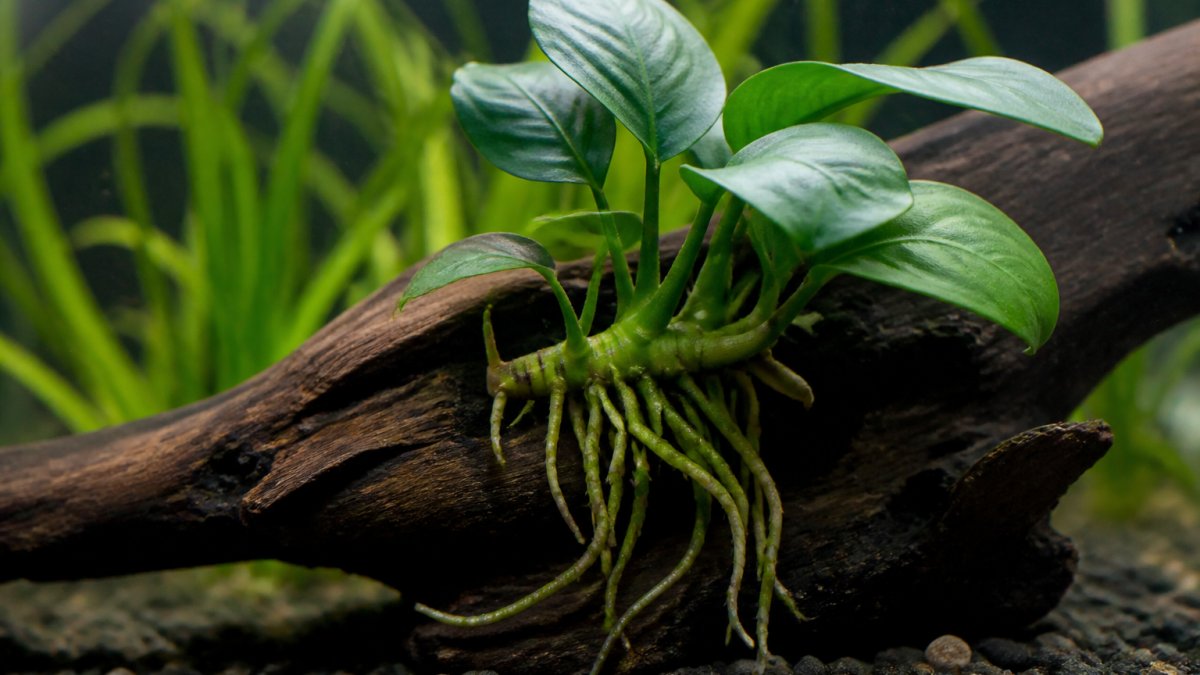
Epiphytes grow on hardscape in nature. They include anubias, java ferns, and mosses. Their rhizomes must stay above substrate.
Root feeders pull most of their nutrition from the substrate. These include crypts, swords, and many stem plants.
Anubias Barteri var. "Nana" is a classic epiphyte. It's low-light, slow-growing, and extremely hardy.
Cryptocoryne Lutea is a root feeder with thin, vertical growth. It's ideal for foreground planting and works well with root tabs.
Java Fern is another epiphyte that's nearly impossible to kill.
Recovery Timeline and When to Remove Damaged Growth
Recovery timelines vary. A plant with light deficiency might show improvement within 1-2 weeks if you upgrade lighting.
Nutrient deficiency takes 2-3 weeks to improve once you start fertilizing. Root rot from buried rhizomes takes 4-6 weeks to fully recover, the plant needs time to grow new, healthy roots.
Don't remove a plant too quickly. If it's producing new growth, even small shoots, leave it in place. The old, damaged leaves will eventually fall off naturally.
If a plant shows no new growth after 6-8 weeks despite your corrections, it's probably dead. Remove it and try again with better conditions or a hardier species.
Frequently Asked Questions
How can I tell if my aquarium plants are dead or just adjusting to the tank?
Healthy plants show new growth within 2-3 weeks, even if leaves look pale. Dead plants have mushy stems, black rhizomes, or no new leaves after 4 weeks. Most aquarium plants experience temporary stress during acclimation, especially emersed-to-submersed transition. Check the rhizome or base: if it's firm and green, the plant is alive. Fully transitioned plants from sources like Ohenrystanksalot skip this adjustment period entirely, arriving ready to grow immediately.
What does it mean when aquarium plants are melting, and can I prevent it?
Plant melt occurs when newly planted species shed their emersed (above-water) leaves to grow submersed (underwater) ones. This is normal acclimation, not death. It typically lasts 2-4 weeks. To prevent severe melt, choose plants already transitioned to aquatic form. Provide stable lighting, consistent water parameters, and gentle water flow. Remove visibly decaying leaves to prevent rot and algae. Plants grown without CO2 adapt faster than those requiring high-tech setups.
Why are my aquarium plants turning yellow, and how do I fix it?
Yellowing usually signals nutrient deficiency (nitrogen, iron, or magnesium), insufficient lighting, or excess ammonia from poor water conditions. First, test water parameters and perform a 25% water change if ammonia or nitrite is above 0 ppm. Increase light duration to 8-10 hours daily if using low-light bulbs. For heavy root feeders like crypts, add root tabs beneath the substrate. For water-column feeders like stem plants, use liquid fertilizer. Most plants recover within 2-3 weeks once the underlying cause is fixed.
Do I need CO2 equipment to keep aquarium plants alive?
No. Many hardy plants thrive in low-energy tanks without CO2 injection. Anubias, Java ferns, and crypts grow slowly but steadily on light and nutrients alone. CO2 is beneficial for faster growth and more demanding stem plants, but not essential for beginners. Plants cultivated without CO2, like those from Ohenrystanksalot, are specifically bred for low-tech setups. Start with easy species, ensure 8-10 hours of light daily, and add root tabs for heavy root feeders. You can add CO2 later if you want faster growth.
Keeping aquarium plants alive comes down to understanding what they need and fixing problems as they arise. Start with hardy, fully transitioned species from reliable sources like Ohenrystanksalot. They arrive ready to grow without the stress of acclimation. Get your light and nutrients right. Avoid burying rhizomes. Do these things and your plants will thrive instead of dying. Shop all plants at Ohenrystanksalot and get started with an Arrive-Alive Guarantee backing every order.