

Grow Aquarium Plants Without CO2: A Complete Guide
Table of Contents
- Can You Really Grow Aquarium Plants Without CO2?
- Aquarium Plants That Don't Need CO2 Injection
- Setting Up a Low-Tech Planted Aquarium
- Fertilizing Your Low-Tech Tank: Aquarium Plant Fertilizer Without CO2
- Planting Density and Layout for Low-Tech Success
- Common Problems and How to Fix Them
- Realistic Timeline and Maintenance Expectations
- Frequently Asked Questions
Last Updated: October 10, 2026
Can You Really Grow Aquarium Plants Without CO2?
Yes, you absolutely can. The short answer is that many aquarium plants thrive without injected carbon dioxide. In fact, you can grow aquarium plants without CO2 by choosing the right species, providing adequate lighting, and maintaining consistent nutrients.
At Ohenrystanksalot, we help aquarium hobbyists succeed with low-tech planted tanks. Our plants are grown without CO2 from the start, which means they're already adapted to thrive in your home aquarium without special equipment.
The real advantage of a low-tech setup is simplicity. You skip the investment in CO2 bottles, diffusers, and regulators. Your electricity bill stays lower. Your tank requires less monitoring.
The catch? Growth is slower. Plants in low-tech tanks take longer to fill in. You won't see the explosive growth you'd get with pressurized CO2. But for most hobbyists, especially beginners, slower growth is actually a benefit.
Let's walk through exactly how to set up a successful low-tech planted aquarium and which plants will actually work in your tank.
Aquarium Plants That Don't Need CO2 Injection
Not all aquatic plants are created equal. Some demand high light and constant nutrient input. Others are forgiving, adaptable, and genuinely happy in low-tech conditions. The plants that don't need CO2 fall into two main categories: epiphytes and root feeders.
Epiphytic Plants: Anubias and Java Fern
Epiphytes are plants that naturally grow attached to rocks and wood rather than rooted in substrate. They pull nutrients directly from the water column, which makes them perfect for low-tech tanks. Two species dominate this category: Anubias and Java Fern.
Anubias Nana is one of the most beginner-friendly aquatic plants available. At Ohenrystanksalot, Anubias Barteri var. "Nana" is a great choice for new aquarists because it arrives fully transitioned and ready to thrive.

The critical rule with Anubias: never bury the rhizome in substrate. The rhizome will rot if covered. Instead, tie or glue the plant to a piece of driftwood or stone using fishing line or plant-safe glue.
Java Fern is equally hardy and versatile. Like Anubias, Java Fern grows from a rhizome and should be attached to hardscape. Microsorum Pteropus, "Java Fern" tolerates low light and adapts to many water parameters, making it nearly impossible to kill.

Both of these epiphytic plants benefit from water movement but don't require it. They're genuinely low-maintenance. Trim dead leaves occasionally. That's it.
Root-Feeding Plants: Crypts and Stem Plants
Root feeders are plants that absorb nutrients through their roots from the substrate. They grow a bit faster than epiphytes but still perform well in low-tech conditions when given a nutrient-rich substrate or root tabs.
Cryptocoryne species are slow-growing, undemanding plants that come in dozens of varieties. They create midground and foreground interest without demanding much. Cryptocoryne Lutea is a particularly elegant variety with thin, reed-like foliage. Crypts send out runners that eventually carpet the substrate, creating a natural, planted look.

Crypts are sensitive to water parameter changes and can experience "crypt melt" if moved to a new tank with very different water chemistry. But once established, they're incredibly stable.
Stem plants like Anacharis and Hornwort round out your low-tech options. These plants grow from the water column and root into substrate. They're fast enough to help outcompete algae but slow enough to manage without constant trimming in a low-tech setup.
Setting Up a Low-Tech Planted Aquarium
A successful low-tech planted tank rests on three foundations: adequate lighting, proper substrate, and consistent nutrient supplementation. Get these three right, and your plants will establish and grow.
Lighting Intensity and Photoperiod
Low-tech doesn't mean no light. It means moderate light, not intense light. The difference matters.
Most aquarium plants need 8 to 10 hours of light per day. Many hobbyists run their tanks for 8 hours to reduce algae pressure while still giving plants enough time to photosynthesize. Some run 10 hours.
Light intensity is measured in PAR (Photosynthetically Active Radiation), but you don't need expensive meters to get this right.
Standard LED aquarium lights work perfectly for low-tech planted tanks. You don't need specialized high-output fixtures. Most modern LED lights designed for planted tanks deliver sufficient PAR.
Position your light directly above the tank. Uneven lighting creates uneven plant growth. Some plants will thrive in the bright spots while others struggle in the shadows. Even coverage prevents this problem.
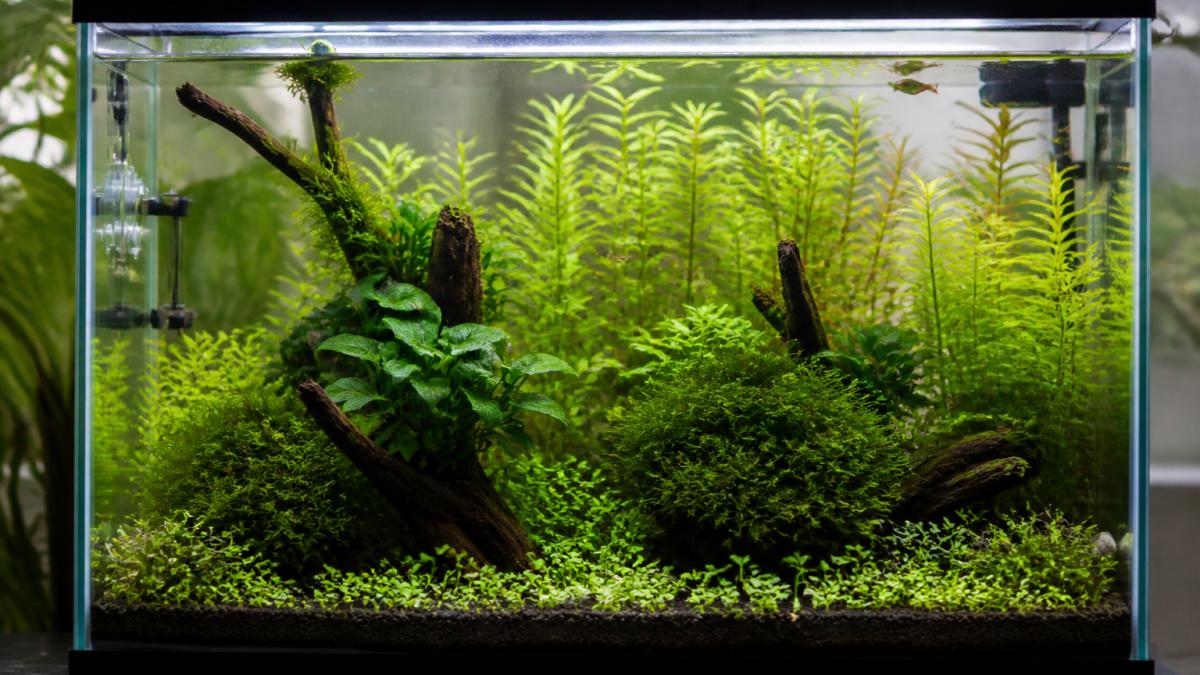
Substrate Choice and Root Tabs
Your substrate choice directly impacts how well root-feeding plants perform. Three main options exist for low-tech tanks.
Nutrient-rich substrates like aquasoil contain organic matter and minerals that feed plants for months. They're the easiest option if you're planting rooted plants like Crypts. Aquasoil does leach tannins initially (turning water slightly brown), but this is harmless and fades within weeks. Cost runs higher than inert options, but the convenience often justifies it.
Inert substrates like sand or gravel don't provide nutrients. If you choose inert substrate, you must supplement with root tabs. Root tabs are small pellets or capsules you bury under the substrate near plant roots. They dissolve slowly, releasing nutrients over weeks or months.
Mixed substrates combine inert gravel with nutrient-rich substrate layers. Many aquarists use a thin layer of aquasoil covered by sand or gravel.
For low-tech tanks, either nutrient-rich substrate or inert substrate plus root tabs works fine. Choose based on your budget and preference.
Fertilizing Your Low-Tech Tank: Aquarium Plant Fertilizer Without CO2
Even in low-tech setups, plants need macronutrients (nitrogen, phosphorus, potassium) and micronutrients (iron, boron, manganese, and others). Your tap water provides some nutrients, but usually not enough to sustain dense planting.
Liquid fertilizers solve this problem. They're affordable, easy to dose, and give you direct control over nutrient levels. Two approaches exist: all-in-one fertilizers and separate macro and micro dosing.
All-in-one fertilizers contain all essential nutrients in one bottle. You dose once or twice weekly according to the bottle's instructions.
Separate dosing means buying macronutrient and micronutrient solutions separately and dosing them on different schedules. This approach offers more control but requires tracking multiple bottles and schedules.
Start with an all-in-one fertilizer and dose conservatively. Watch your plants for signs of deficiency (yellowing leaves, stunted growth, pale coloring). If plants look healthy, you're dosing enough. If they show deficiency signs, increase dosing slightly.
Water changes also matter. A 25% water change weekly removes old nutrients and replaces them with fresh tap water nutrients.
Planting Density and Layout for Low-Tech Success
Dense planting is beneficial in a low-tech tank. More plants mean more competition for nutrients and light, which naturally suppresses algae growth. Dense planting also creates the lush, full look many aquarists want.
Start with more plants than you think you need. In a 20-gallon tank, plant 15 to 20 stems or clusters. In a 10-gallon, use 8 to 12. This density feels crowded initially, but plants grow slowly in low-tech setups.
Arrange plants by height. Tall stem plants go in the background. Medium plants occupy the midground. Foreground plants like Anubias Nana and Cryptocoryne Lutea create depth and frame the hardscape. This arrangement mimics natural landscapes.
Leave open areas for fish to swim and for your eyes to rest. Strategic open space, especially near the front center, can improve the overall composition.
Attach epiphytic plants to hardscape during initial setup. This prevents the common mistake of burying rhizomes in substrate. Use fishing line, plant-safe glue, or small plant weights. Within weeks, roots will anchor the plants.
Common Problems and How to Fix Them
Even with a solid setup, low-tech tanks occasionally develop issues. Most problems have solutions.
Slow Growth and Algae Issues
Slow growth is normal in low-tech tanks, but growth that stops entirely signals a problem. Common causes include insufficient light, nutrient deficiency, or poor water flow.
If plants stop growing, check your lighting first. Run your lights 10 hours instead of 8. If growth resumes within 2 weeks, light may have been a limiting factor. If growth doesn't improve, increase fertilizer dosing slightly and see if that helps.
Algae in low-tech tanks usually means excess nutrients, excess light, or insufficient plant mass. If you see green algae (the slimy kind), it's usually nutrient imbalance. Reduce fertilizer slightly and increase water change frequency.
If you see black beard algae (the fuzzy kind), it's often a sign of poor water flow or excess nutrients. Increase water circulation or adjust your filter output. Manually remove visible algae with a brush or by hand.
Dense planting can help prevent algae problems. Plants consume excess nutrients, starving algae of food.
Plant Melt and Nutrient Deficiencies
Plant melt occurs when plants suddenly shed leaves and deteriorate. It's usually caused by a dramatic change in water parameters or extreme stress during shipping.
If you receive plants that show melt, don't panic. Melt is temporary. The plant's roots and rhizome are usually fine. Remove dead leaves by hand. Maintain stable water parameters. New growth may appear within 2 to 3 weeks.
To prevent melt after purchasing plants, acclimate them slowly. Float the plant container in your tank for 15 minutes. Gradually add tank water to the container over the next 30 minutes, then plant it.
Nutrient deficiency shows as yellowing leaves (nitrogen deficiency), pale or translucent leaves (micronutrient deficiency), or stunted new growth (phosphorus deficiency). If you see these signs, increase fertilizer dosing and perform a 50% water change. Most deficiencies may resolve within 2 weeks of consistent fertilization.
Realistic Timeline and Maintenance Expectations
A low-tech planted tank doesn't establish overnight. Expect a 3 to 6 month establishment period before your tank looks fully planted.
Weeks 1 to 4: Plants focus on root development rather than visible growth. You'll see minimal change above the substrate. Don't panic. This is normal. Perform 25% water changes weekly. Dose fertilizer as directed on the bottle.
Weeks 5 to 12: New growth becomes visible. Stem plants send up new shoots. Epiphytes develop new leaves. Growth is still slow, but noticeable. Trim stem plants when they reach the water surface, then replant the cuttings.
Months 3 to 6: Your tank reaches maturity. Plants fill in nicely. Growth slows as plants reach their mature size. Algae pressure may decrease as plant mass increases. Maintenance becomes routine.
Weekly maintenance takes 30 to 45 minutes total:
- 25% water change
- Trim dead or yellowing leaves
- Dose fertilizer (usually once or twice weekly)
- Clean filter intake if needed
- Check for algae and remove if present
Monthly tasks include:
- Deep clean the substrate with a gravel vac
- Replace filter media if using mechanical filtration
- Check plant rhizomes and roots for rot or disease
This schedule keeps your tank healthy. Low-tech planted tanks are generally low-maintenance compared to high-tech setups with CO2 injection.
Growing aquarium plants without CO2 is absolutely achievable. With our Arrive-Alive Guarantee and personalized support, we aim for your new plants to succeed from day one.
Frequently Asked Questions
What plants can thrive in an aquarium without CO2?
Hardy, slow-growing species excel in no-CO2 tanks. Epiphytes like Anubias Nana and Java Fern absorb nutrients from the water column and require only low to medium light. Root feeders such as Cryptocoryne Lutea benefit from nutrient-rich substrate but adapt well without injection. Stem plants like Anacharis and Guppy Grass also grow steadily without supplemental carbon. These plants are beginner-friendly and thrive in standard aquarium conditions.
How much light do aquarium plants need in a no-CO2 tank?
Most low-tech plants thrive on 6-8 hours of moderate LED lighting daily. Light intensity matters more than duration. Consistent photoperiod helps establish a healthy plant cycle and reduces stress on fish and plants alike.
Do I need fertilizers for a no-CO2 planted aquarium?
Yes, liquid fertilizers are essential in low-tech setups. All-in-one liquid fertilizers provide macronutrients (nitrogen, phosphorus, potassium) and micronutrients (iron, boron, manganese) that fish waste alone cannot supply. Dose according to plant demand and water change frequency. Root tabs benefit substrate-rooted plants like crypts. Without supplementation, plants may yellow, grow slowly, or show nutrient deficiency symptoms. Regular water changes also replenish nutrients naturally.
Can aquarium plants grow in gravel without CO2?
Yes, but nutrient-rich substrate makes a difference. Standard gravel supports slow-growing root feeders if you add root tabs beneath the substrate. Aquasoil or specialized plant substrates retain more nutrients without CO2 injection. Epiphytic plants like Anubias don't require substrate at all, they attach to hardscape. For beginners, a combination of quality substrate and root tabs can be a good foundation for low-tech plant growth.