

Best Aquatic Plants for Shrimp Tanks: 10 Hardy Species
Table of Contents
- Why Aquatic Plants Matter in Shrimp Tanks
- Quick Comparison: Best Aquatic Plants for Shrimp Tanks
- Low-Light Plants for Shrimp Tanks: Anubias and Java Fern
- Floating Plants for Shrimp Tanks: Surface Coverage and Shelter
- Moss for Shrimp Tanks: Grazing Surfaces and Biofilm Growth
- Foreground Carpeting Plants: Cryptocorynes
- What Do Freshwater Shrimp Eat: Plant-Based Nutrition
- Shrimp Safety: Pesticide Precautions and Plant Selection
- Frequently Asked Questions
Last Updated: October 16, 2026
Why Aquatic Plants Matter in Shrimp Tanks
Aquatic plants do far more than look good. The best aquatic plants for shrimp tanks provide grazing surfaces, biofilm, shelter, and natural water filtration, keeping freshwater shrimp healthy and reducing maintenance.
Most people assume any plant will work. It won't. Plants that melt, need CO2 injection, or demand intense lighting waste money.
Shrimp tanks benefit from variety. Mosses provide grazing biofilm. Floating plants create shade and reduce surface agitation. Epiphytes like Anubias and Java fern attach to hardscape for layout flexibility.

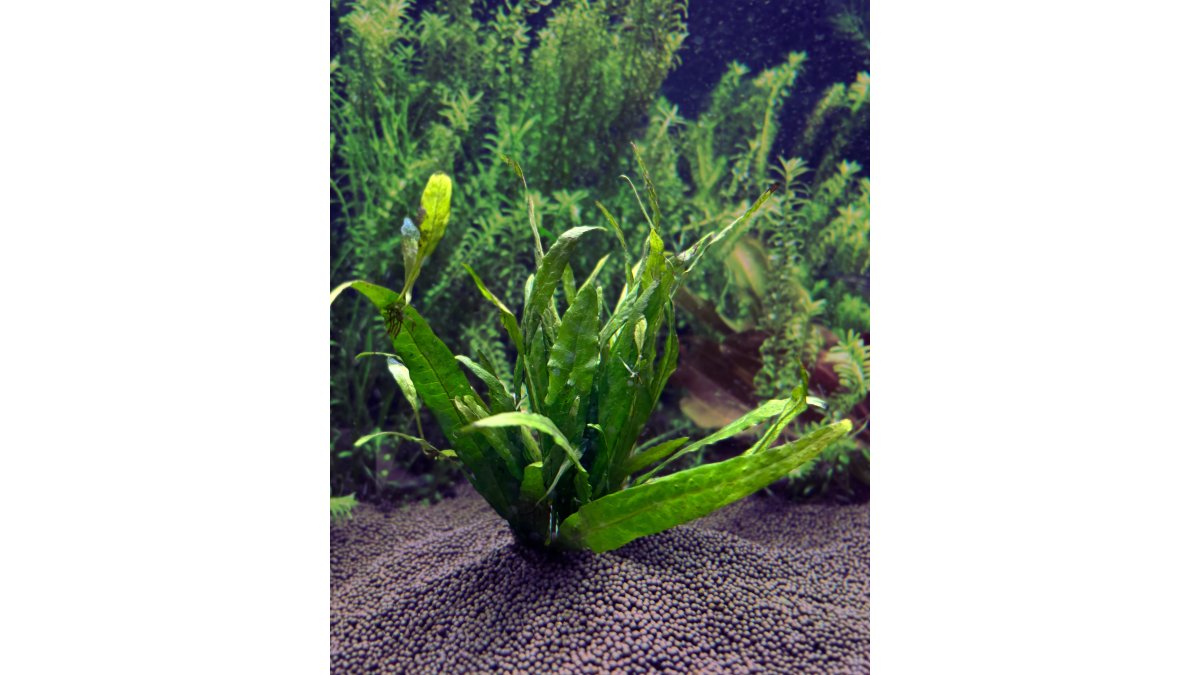
The right plants turn a basic tank into a stable, self-sustaining environment: shrimp feel secure, water quality stays balanced, and maintenance becomes predictable.
Quick Comparison: Best Aquatic Plants for Shrimp Tanks
| Plant Type | Best For | Light Needs | Difficulty | Starting Price |
|---|---|---|---|---|
| Anubias Nana | Foreground, beginners | Low-Medium | Very Easy | $4.50 |
| Java Fern | Mid-background, hardy | Low-Medium | Very Easy | $5.50 |
| Anubias Minima | Midground elegance | Low-Medium | Very Easy | $9.00 |
| Hornwort | Fast growth, shelter | Medium | Easy | $3.75 |
| Frogbit | Surface coverage, roots | Medium-High | Easy | $5.50 |
| Red Root Floaters | Delicate foliage, slow | Medium-High | Easy | $5.50 |
| Salvinia Minima | Compact floater, easy | Medium-High | Very Easy | $3.75 |
| Cryptocoryne Parva | Foreground carpet | Any | Very Easy | $3.00 |
| Cryptocoryne Lutea | Vertical midground | Low-Medium | Easy | $4.00 |
| Anubias on Driftwood | Instant aquascape | Low-Medium | Very Easy | $18.75 |
Low-Light Plants for Shrimp Tanks: Anubias and Java Fern
Low-light plants are the foundation of most shrimp tanks. They need no expensive lighting or CO2 injection, and grow slowly enough to avoid algae blooms, ideal if your tank sits away from windows or you keep equipment minimal.

Anubias Nana: Compact Foreground Option
Anubias Nana is the workhorse of beginner shrimp tanks. Its deep green, ovular leaves grow tightly around the rhizome, and at 3-5 inches mature it fits foreground positions or nano tanks. Low-light tolerance makes it forgiving where other plants struggle.
Critical: Anubias is an epiphyte, so its rhizome must stay above the substrate, bury it and it rots. Attach it to driftwood or stone; it then absorbs nutrients from the water column. Good flow prevents rot, and shrimp graze on the leaf surfaces and biofilm.
Propagation is simple: cut the rhizome between nodes, ensuring each piece has roots and leaves, and within weeks you'll have multiple plants. At $4.50 from Ohenrystanksalot, Anubias Nana is affordable enough to buy several and create a layered foreground.
Anubias Minima: Elegant Midground Choice
For vertical height without aggressive growth, Anubias Minima delivers. Its long, slender, wavy leaves grow on short stems, and at 6-10 inches mature it adds structure to midground or background without overwhelming small tanks.
Like all Anubias, Minima is an epiphyte, attach it to hardscape with the rhizome above substrate. Low-light tolerance and slow growth mean minimal trimming, while shrimp shelter between leaf stems and graze on biofilm.
At $9.00, Minima costs more than Nana but offers a different aesthetic; use both for visual variety. Its slow growth frees you to focus on other tank management.
Java Fern: The Hardy Classic
Java Fern is the plant that works when nothing else does, hardy, adaptable, and attractive, popular with beginners and experienced aquarists alike. At 5 inches mature, it fits most layouts without dominating.
Java Fern is epiphytic, so attach it to hardscape rather than burying it. It reproduces via small plantlets at the leaf ends; remove them by hand or divide the rhizome, and one plant becomes many without additional purchases.
Low-to-medium light tolerance makes Java Fern flexible, working under minimal or moderate lighting. Shrimp graze on leaf surfaces and shelter between fronds. At $5.50, it's affordable; many keepers buy several for dense, secure coverage.
Floating Plants for Shrimp Tanks: Surface Coverage and Shelter
Floating plants are functional, not just aesthetic. They shade the substrate, their roots create extra biofilm surfaces in the water column, and they absorb excess nutrients to help control algae.
Frogbit and Red Root Floaters
Frogbit produces large, round leaves up to 2 inches across with a squishy underside, growing into a dense surface mat.
Frogbit propagates through side shoots. Insider tip: remove offshoots so each floret dedicates nutrients to leaf growth, yielding bigger foliage plus extra plantlets. At $5.50, it's affordable for substantial surface coverage.
Red Root Floaters offer a different aesthetic: delicate green-to-pink leaves and thick red roots. They grow slower than other floaters, so they're easier to manage and won't overtake your tank aggressively.
In high light they blush pink and can produce small white flowers, and they excel at algae control by absorbing excess nutrients. At $5.50, they match Frogbit's price with more visual distinction. Use floating dividers to keep growth controlled.
Salvinia Minima: Compact Floater
If duckweed has taken over before, Salvinia Minima is the answer. It forms mat-like sheets that stay clumped, unlike duckweed's scattered growth, with leaflets only half an inch across, delicate without the invasiveness.
Salvinia Minima clogs filters less than other floaters, and excess growth is easy to scoop out. It prefers low surface disruption, so use floating rings for calm pockets. It absorbs excess nitrates in heavily stocked tanks, ideal for shrimp colonies.
At $3.75, Salvinia Minima is one of the most affordable floaters. It propagates on its own, just discard extras if overgrown. Shrimp appreciate its shade and the biofilm on its roots.
Hornwort: Fast-Growing Shelter
Hornwort is the fast-growing option for quick results. It can reach 6 feet, though trimming keeps it manageable, and its bushy foliage offers excellent hiding places for fry and shrimplets plus maximum biofilm surface.
Hornwort adapts to temperature, pH, lighting, and even salinity, making it reliable across setups. It grows best floating, buried portions typically rot, though you can hold it near the substrate, where it may develop anchoring leaves.
The main requirement is regular trimming: Hornwort grows aggressively enough to overtake a tank, block light, and consume nutrients meant for slower species. At $3.75 it's affordable, but plan for maintenance, the fast growth means abundant biofilm for your colony.
Moss for Shrimp Tanks: Grazing Surfaces and Biofilm Growth
Mosses are the biofilm factories of shrimp tanks. Shrimp graze for hours on the microscopic organisms colonizing moss surfaces, and mosses shelter shrimplets and molting adults. They're nearly impossible to kill and need no substrate or fertilization.
Java Moss is the standard, slow enough to manage, dense enough for substantial biofilm; attach it to driftwood or stone with fishing line or plant weights. Christmas Moss offers finer foliage, Subwassertang a feathery pattern, and Marimo moss balls spherical focal points with the same biofilm function.
Mosses thrive in low light, needing only water flow and time, no CO2 or special fertilizers. Many keepers use moss as the primary plant, adding a few Anubias or Java Fern for variety.
Foreground Carpeting Plants: Cryptocorynes
Cryptocorynes create the carpet effect many aquascapers pursue, low-growing, adaptable, and beginner-friendly. Two excel in shrimp tanks: Cryptocoryne Parva and Cryptocoryne Lutea.
Cryptocoryne Parva stays under 3 inches, the shortest foreground option. It adapts to any lighting from low to high, so you can place it anywhere, and it's extremely low maintenance, forming carpets over time.
Cryptocoryne Lutea grows slightly taller at 4 inches, with thin, reed-like foliage growing mostly vertically. Deep green, almond-shaped leaves on thin brown stems create an elegant look.
Crypt Lutea prefers nutrient-rich substrate but grows in inert substrate with root tabs.
At $3.00 for Parva and $4.00 for Lutea, both are affordable foreground solutions. Shrimp move freely through the dense growth, finding food and shelter, security for molting shrimp and shrimplets.
What Do Freshwater Shrimp Eat: Plant-Based Nutrition
Freshwater shrimp are detritivores and omnivores, consuming decaying plant matter, algae, biofilm, and microorganisms. A planted tank provides continuous food, reducing your feeding burden as shrimp graze throughout the day.
Biofilm is the primary nutrition source, forming on all plant surfaces and hardscape. Shrimp graze on this microscopic layer for hours. Mosses and fine-leaved plants like Hornwort maximize biofilm production with more surface area than broad-leaved plants.

Shrimp also consume decaying leaves and plant matter. As plants shed leaves or you trim, shrimp process the waste, reducing algae and maintaining water quality. In heavily planted tanks, feed less often because plant-based nutrition is abundant.
Different plants support different biofilm communities: Java Moss dense, Cryptocorynes moderate with more grazing movement, floating plants on root surfaces. A mix ensures varied nutrition and keeps shrimp engaged.
Shrimp Safety: Pesticide Precautions and Plant Selection
Not all aquatic plants are safe for shrimp. Many commercial plants are treated with pesticides during transport and retail storage, and those pesticides kill shrimp. Source matters.
Ohenrystanksalot grows plants without CO2 and without pesticide treatments. Our Arrive-Alive Guarantee means plants arrive healthy and ready for your tank, free of pesticide contamination, because we focus on hardy species needing no chemical protection.
When sourcing elsewhere, ask about pesticide use, many retailers won't disclose treatment history.
Hardy, field-grown plants like those we cultivate at Ohenrystanksalot carry minimal chemical risk.
Stick with proven shrimp-safe species: Anubias, Java Fern, Cryptocorynes, mosses, and hardy floating plants. They create stable environments without chemical or biological risks, avoiding sudden die-offs from plant treatments.
Building a planted shrimp tank needs no expensive equipment or advanced techniques.
At Ohenrystanksalot, we specialize in fully transitioned plants grown without CO2, backed by our Arrive-Alive Guarantee and 7-day Thrive Policy. Real human support is available by phone for plant selection and care questions. Shop all plants and get free overnight shipping on orders over $125.
Frequently Asked Questions
What plants do freshwater shrimp eat?
Freshwater shrimp graze on biofilm, algae, and decaying plant matter rather than consuming living plant tissue directly. Mosses and low-light plants like Java fern and Anubias create ideal grazing surfaces where biofilm accumulates. Floating plants and carpeting species also support this microorganism growth. Shrimp benefit from plants that shed leaves naturally, providing additional food sources. Hardy plants without pesticides ensure shrimp can forage safely without chemical exposure.
Which low-light plants grow well in a shrimp tank?
Anubias species, Java fern, and Cryptocorynes are the best low-light plants for shrimp tanks. Anubias Nana reaches 3-5 inches and attaches to driftwood or stone, while Anubias Minima grows 6-10 inches with elegant wavy leaves. Java fern tolerates minimal light and reproduces via leaf plantlets. Cryptocoryne Parva adapts to any lighting condition and forms low carpets under 3 inches. All these plants require minimal maintenance and no CO2, making them ideal for beginners and shrimp-focused setups.
Are floating plants safe for shrimp tanks?
Yes, floating plants are excellent for shrimp tanks when chosen carefully. Frogbit, red root floaters, and Salvinia Minima provide surface shelter and shade while absorbing excess nutrients. These plants grow slowly enough to prevent overgrowth that blocks light. Floating plants create hiding spaces for shrimplets and adult shrimp during molting. Ensure plants are pesticide-free and fully transitioned to aquatic life before adding them. Monitor growth with floating dividers to maintain open water areas for gas exchange.
What substrate and nutrients do planted shrimp tanks need?
Most hardy shrimp tank plants thrive in inert substrate like sand or gravel when paired with water-column nutrient uptake. Rhizome plants (Anubias, Java fern) absorb nutrients directly from the water column via good flow, so they don't require nutrient-rich substrate. Root-feeding plants like Cryptocorynes benefit from nutrient-rich substrate or root tabs in inert setups. Plants grown without CO2 in Ohenrystanksalot's catalog adapt to standard tap water parameters, though trace minerals and humic substances from driftwood support growth. Regular water changes provide ongoing nutrient replenishment.
How do I prevent plant melt when setting up a new shrimp tank?
Plant melt occurs when plants transition from emersed (above water) to submerged conditions. Ohenrystanksalot's fully transitioned plants skip this acclimation period entirely, arriving ready to plant without melting risk. If adding any new plant, acclimate it gradually to your tank's water parameters over 1-2 weeks. Use hardy species like Anubias, Java fern, and Cryptocorynes that tolerate parameter shifts. Ensure good water flow, stable lighting, and avoid disturbing plants during their first weeks. The Arrive-Alive Guarantee and 7-day Thrive Policy protect your investment.