

How to Transition Emersed Aquarium Plants
Last Updated: October 25, 2026
Quick Summary
To transition emersed aquarium plants, provide stable water conditions (pH 6.0-7.5, temperature 72-78°F, 0 ppm ammonia and nitrite), moderate lighting at 8-10 hours daily, and patience as old leaves melt and new submersed leaves emerge over 3-6 weeks. This leaf melt is normal adaptation, not plant death.
- Most emersed plants complete transition in 3-6 weeks with observable new submersed growth appearing by week 2-3.
- Stable water parameters matter more than perfect numbers; avoid major water changes for at least one week after planting.
- Plant stem plants 2-3 inches apart with lowest healthy leaves just above gravel; never bury rhizomes of plants like Anubias.
- Normal melt is confined to older emersed leaves while new growth appears; if no new growth emerges after 4 weeks, check for rot or poor water conditions.
- Run your tank at least 1 week before adding plants to establish a basic nitrogen cycle and reduce transition stress.
Table of Contents
- Understanding Emersed vs. Submersed Growth Forms
- Why Aquarium Plant Melt After Planting Happens
- Preparing Your Tank and Water Parameters Before Transition
- How Long Aquarium Plants Take to Transition
- Step-by-Step Guide to Planting Emersed-Grown Stem Plants
- Planting Anubias in an Aquarium: Special Considerations
- Starting Your Transition with Hardy, Pre-Acclimated Plants
- Frequently Asked Questions
Understanding Emersed vs. Submersed Growth Forms
Emersed plants are grown above water in high humidity, developing a waxy cuticle that protects them from drying out. Submersed plants live entirely underwater, with softer, thinner leaves that lack that layer because they don't need it.
When you transition emersed aquarium plants directly into your aquarium, they enter a completely different environment: leaves evolved for air must now function underwater. This triggers "leaf melt", where older leaves dissolve as the plant adapts. It's not death, it's transformation.
At Ohenrystanksalot, we focus on fully transitioned, hardy species cultivated without CO2 so they adapt quickly to new tanks.
Emersed plants aren't broken on arrival, they're switching modes. Manage that switch so new submersed growth emerges healthy.
Why Aquarium Plant Melt After Planting Happens
Plant melt happens because the plant is doing exactly what it should. When emersed leaves hit water, they can't survive in that form, so the plant redirects energy into new submersed leaves.
Here's what's actually occurring:
- The old cuticle-coated leaves were designed for air
- Water exposure breaks down that protective layer
- The plant recognizes the change and abandons old growth
- New leaves emerge with thinner, more delicate structures suited for water
- This process takes 2-4 weeks for most species
Watch out: If ALL the plant's leaves melt and no new growth appears after 4 weeks, something else is wrong, likely poor water conditions, insufficient light, or a dead rhizome. Single leaves melting while new shoots emerge is normal adaptation.
Many hobbyists panic at melting leaves and want to remove the plant or change everything. Resist that: melt is a sign the plant is responding to its new environment.
Inconsistent water parameters stress the plant and slow adaptation; stable parameters, even if imperfect, let it focus on growing submersed leaves.
Preparing Your Tank and Water Parameters Before Transition
Before you add emersed plants, dial in your aquarium's foundation. Unstable water conditions are the real killer, not the transition itself.
Target these parameters for most freshwater aquatic plants:
- pH: 6.0-7.5 (stable is more important than exact)
- Hardness: 4-8 dGH (general hardness)
- Temperature: 72-78°F
- Ammonia: 0 ppm
- Nitrite: 0 ppm
- Nitrate: Below 40 ppm (ideally 10-20 ppm)
Run lighting 8-10 hours daily. Moderate light during transition reduces algae while giving new growth enough energy; increase photoperiod once submersed leaves are established.
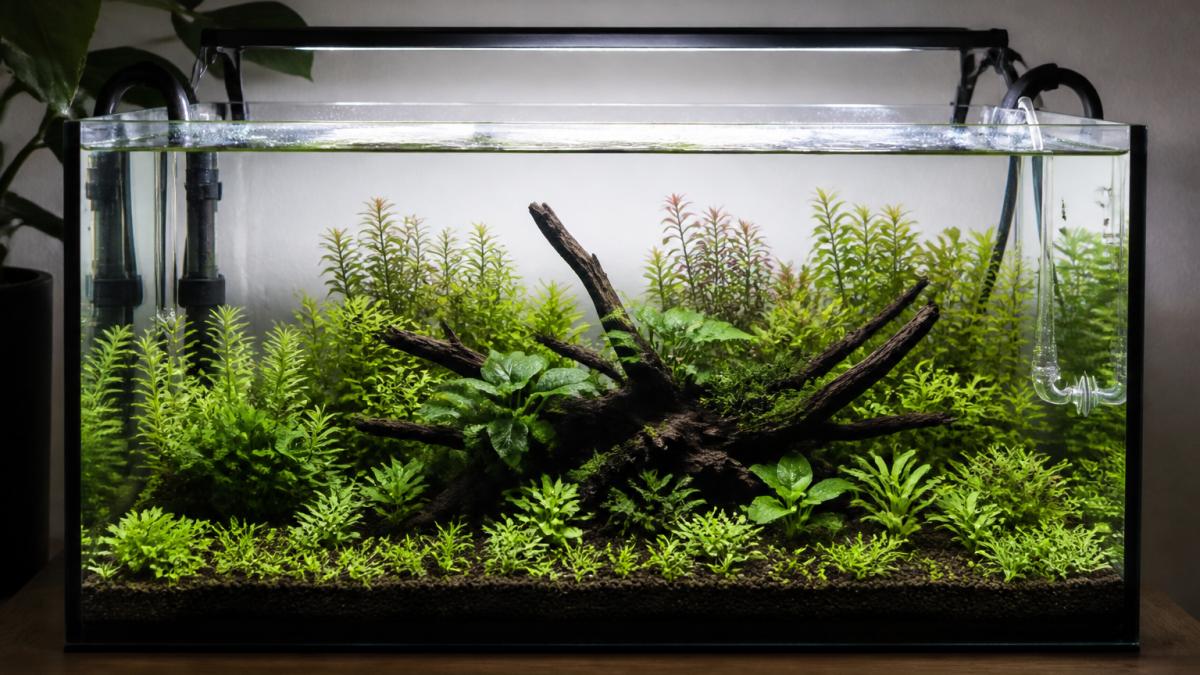
Perform a 25% water change 2-3 days before planting to remove excess waste, then avoid major changes for at least a week after planting.
How Long Aquarium Plants Take to Transition
Most transition emersed aquarium plants complete their adaptation in 3-6 weeks, but observable milestones matter more than the calendar. Use the schedule below to know what to do each week and what to look for.
| Week | Maintenance Action | What You Should See | Red Flag |
|---|---|---|---|
| 1 | No fertilizer. Keep lighting at 8-10 hours. Top off evaporation with dechlorinated water. | Old emersed leaves turn translucent or brown at the edges; some drop off. | All leaves turn mushy and disintegrate within days, or a foul smell develops. |
| 2 | Begin light all-in-one fertilizer at half dose if tap water is soft. Remove fully melted leaves with clean scissors. | First new submersed leaves appear at stem nodes or from the rhizome center. | No new growth and remaining leaves are black or fuzzy. |
| 3 | 10-15% water change. Check temperature stability. | New leaves are thinner, lighter green, and smaller than the originals. | New leaves emerge but immediately turn yellow and stop growing. |
| 4 | Resume normal fertilizer dose. Inspect for algae on old leaves. | Plant anchors to substrate; roots visible at the base. | Rhizome feels soft or hollow when gently pressed. |
| 5-6 | Trim dead stems back to healthy tissue. Maintain 8-10 hour photoperiod. | Dense new growth; plant looks vibrant and holds its position. | Old growth continues to melt while new growth stalls. |
Distinguishing normal melt from failed conversion. Normal melt is confined to older emersed leaves, progresses from the leaf edge inward, leaves the stem or rhizome firm, and new growth appears within 2-3 weeks. Failed conversion means a soft, brown, or hollow rhizome or stem base, melt spreading to new leaves, and no new growth after 4 weeks. A foul odor or fuzzy white growth indicates rot: remove the affected tissue, check that the rhizome is not buried, and confirm ammonia and nitrite are at 0 ppm.
Species-specific expectations. Transition speed varies widely by plant type; treat the table below as planning guides, not guarantees.
| Species | Likely Melt | Typical Adaptation Time | Special Handling |
|---|---|---|---|
| Ludwigia | Moderate | 10-14 days | Plant individual stems 2-3 inches apart; responds fast to stable light. |
| Alternanthera | Moderate | 2-3 weeks | Keep temperature steady; avoid moving stems once planted. |
| Cryptocoryne | Heavy | 3-6 weeks | Expect near-total leaf loss; do not disturb the root mass. |
| Java fern | Light to moderate | 4-6 weeks | Attach rhizome to hardscape; never bury it. |
| Anubias | Heavy | 6-8 weeks | Rhizome must stay exposed; moderate light reduces algae competition. |
| Amazon sword | Moderate | 3-5 weeks | Heavy root feeder; add root tabs after week 2. |
Quarantine and pest prevention. Inspect plants under bright light for snails, eggs, hydra, and algae. A 5-10 minute plant-safe dip, then a week in a separate container with stable water, catches hitchhikers before they enter the display tank.
Measurable water targets during transition. Keep temperature at 72-78°F, pH at 6.0-7.5, general hardness at 4-8 dGH, ammonia and nitrite at 0 ppm, and nitrate below 40 ppm (ideally 10-20 ppm). Stability matters more than perfect numbers.
Patience is the actual secret: stable conditions plus time equals success. Rushing with water changes, fertilizer adjustments, or constant moving resets the clock.
Step-by-Step Guide to Planting Emersed-Grown Stem Plants
Step 1: Rinse the plant gently
Rinse the plant under lukewarm tap water to remove packing material, debris, hitchhiker pests, and algae spores.
Step 2: Trim dead or damaged leaves
Remove brown, mushy, or translucent leaves with clean scissors; they won't recover underwater, and removing them redirects energy to healthy tissue.
Step 3: Plant at the correct depth
Push the stem into substrate so the lowest healthy leaves sit just above the gravel.
Step 4: Space stems properly
Separate bunched stems into individual plants and space them 2-3 inches apart. Crowding reduces water flow and light penetration, slowing transition.
Step 5: Wait before fertilizing
Don't fertilize for the first 2 weeks; the stressed plant can trigger algae blooms instead of growth. After week 2, add a basic all-in-one fertilizer if your tap water is soft.
Step 6: Maintain stable conditions
Don't change water parameters or lighting schedule for 3-4 weeks; small daily water changes (10-15%) are fine, but major changes stress the plant.
Step 7: Watch for new growth
By week 2-3, new leaves should appear along the stem, thinner, lighter green, and more delicate than the original emersed leaves.
Planting Anubias in an Aquarium: Special Considerations
The rhizome is the thick horizontal stem where leaves and roots attach. It's the plant's survival engine.
The cardinal rule: never bury the rhizome.
Plant Anubias so the rhizome sits on top of substrate or attached to a rock or piece of driftwood.
Tie Anubias to hardscape with fishing line or plant thread, wrapped loosely around the rhizome and anchored to rock or wood.
Anubias transition expectations. Anubias transitions slowly, expect 6-8 weeks for full adaptation. Old emersed leaves melt almost completely, often leaving bare rhizome sections, while new submersed leaves emerge from the center. This is normal; do not remove the rhizome during this phase, as the plant is redirecting energy, not dying.
During transition, Anubias needs moderate, not intense, lighting; low light reduces algae competition.
Troubleshooting Anubias melt versus rot. Normal melt is confined to older leaves and leaves the rhizome firm and green.
| Species | Likely Melt | Typical Adaptation Time | Special Handling |
|---|---|---|---|
| Anubias (broad-leaf varieties) | Heavy | 6-8 weeks | Rhizome exposed; moderate light; attach to hardscape. |
| Anubias Hastifolia | Moderate to heavy | 6-8 weeks | Hardy; tolerates transition stress better than slower growers. |
| Java fern | Light to moderate | 4-6 weeks | Attach rhizome to rock or wood; never bury. |
| Bucephalandra | Moderate | 4-8 weeks | Slow grower; keep flow gentle and light moderate. |
| Bolbitis | Moderate | 4-6 weeks | Attach to hardscape; avoid disturbing once established. |
We recommend Anubias Hastifolia for beginners because it's one of the hardiest Anubias varieties.
A basic liquid all-in-one fertilizer after week 2 supports new leaf development in slower-metabolizing rhizome plants. Avoid burying root tabs against the rhizome; place them nearby so roots can reach them without risking rot.
Quarantine before attaching. Inspect the rhizome and leaves for snails, snail eggs, and algae before tying the plant to hardscape. A week in a separate container with stable water lets you catch hitchhikers and trim damaged tissue before it enters the display tank.
Starting Your Transition with Hardy, Pre-Acclimated Plants
The easiest path to success is starting with plants that have already transitioned. Pre-acclimated plants skip the melt phase entirely and grow immediately.
At Ohenrystanksalot, 85% of our plants are fully transitioned to aquatic environments before shipping. They arrive ready to plant and grow.
For your first planted tank, consider starting with a variety pack. The 8 Plant Variety Pack includes multiple hardy species chosen specifically for beginner success.

Hardy species that transition fastest include:
- Ludwigia, shows new growth in 10-14 days
- Alternanthera, adapts within 2-3 weeks
- Cryptocoryne, slower but very reliable
- Java fern, patient but nearly indestructible
- Anubias, slow transition but extremely tough
Start with 2-3 species maximum. This lets you observe how each one adapts and troubleshoot if problems arise. Once you see success with hardy plants, you can experiment with more demanding species.
Our Arrive-Alive Guarantee and 7-day Thrive Policy back every plant we ship. If a plant doesn't establish within 7 days, we replace it.
Transitioning emersed plants is straightforward once you understand what's happening. The plant isn't dying, it's adapting.
Frequently Asked Questions
How long does it take emersed-grown aquarium plants to adjust underwater?
Most emersed-grown plants begin adapting within 2-4 weeks, though the full transition can take 4-8 weeks depending on species and tank conditions. Stem plants typically adjust faster than rhizomes or epiphytes. During this period, expect some older leaves to melt or discolor as the plant develops new submersed growth with a different leaf shape and cuticle structure suited for underwater life.
Do emersed aquarium plants always melt after planting?
Leaf melt is common but not inevitable. It occurs when emersed-grown plants transition to submersed conditions and shed their old cuticle-coated leaves. Pre-transitioned plants from growers like Ohenrystanksalot experience minimal melt because they've already begun adapting. Proper water parameters, stable lighting, and gentle handling reduce melt severity. Some melt is normal; excessive melt signals poor water conditions or plant damage during shipping.
Should you quarantine or rinse emersed aquarium plants before adding them?
Yes, rinsing is recommended to remove substrate debris and potential pests or algae spores. Gently rinse under tap water, then inspect the plant for visible pests, snail eggs, or disease. A 1-2 week quarantine in a separate container is ideal if you're concerned about pest introduction, though it's not always necessary with reputable suppliers. Always inspect the roots and stem for damage before planting in your main tank.
What water parameters help emersed plants transition most successfully?
Stable parameters are critical: maintain pH 6.0-7.5, temperature 72-78°F, and perform 25-30% water changes weekly. Provide moderate lighting (8-10 hours daily) and ensure adequate fertilization, especially nitrogen and iron, to support new submersed growth. CO2 is not required for hardy no-CO2 plants, but consistent water conditions reduce transition stress and melt.
