

BucePlant vs Canton Aquatics: Which Retailer Wins?
Last Updated: October 23, 2026
Quick Summary
BucePlant vs Canton Aquatics reveals two distinct approaches: BucePlant prioritizes rare plants and tissue-culture variety for experienced buyers, while Canton Aquatics emphasizes consistent plant quality and reliable shipping for beginners. Choose BucePlant for selection and specialty plants; choose Canton Aquatics for reliability and minimal arrival stress.
- BucePlant offers a large catalog spanning beginner to specialist with deep tissue-culture lines and frequent restocks, priced $6-$15 per common plant.
- Canton Aquatics stocks a focused, curated selection with consistently vibrant arrivals and heavy insulation packaging with gel packs.
- BucePlant's emersed-grown inventory often melts back after submersion, requiring a two-to-four-week transition period.
- Canton Aquatics provides responsive, personalized customer support, while BucePlant offers email support with templated responses.
- Both retailers publish live-arrival guarantees, but claim windows, evidence requirements, exclusions, and remedies vary significantly between them.
Table of Contents
- BucePlant vs Canton Aquatics at a Glance
- BucePlant Review: Strengths and Limitations
- Canton Aquatics Review: What Sets Them Apart
- Plant Quality and Survival: Shipping and Arrival Condition
- Best Places to Buy Aquarium Plants Online: What to Prioritize
- Online Aquarium Plant Shipping Tips for Success
- Which Retailer Should You Choose?
- Frequently Asked Questions
BucePlant vs Canton Aquatics at a Glance
When you're shopping for aquarium plants online, the retailer you choose makes all the difference between a thriving planted tank and dead or melting greenery. BucePlant vs Canton Aquatics comparison shopping reveals two distinctly different approaches: one prioritizes volume and variety; the other focuses on plant quality and customer relationships. Understanding these differences helps you pick the retailer that matches your needs, whether you're a beginner or an experienced aquascaper hunting rare specialty plants.
At Ohenrystanksalot, we've worked with hobbyists who've tried both retailers. This guide breaks down what each does well, where they fall short, and how to evaluate any online aquarium plant retailer.
Here's how these two retailers compare across the factors that matter most when ordering aquarium plants online.
| Factor | BucePlant | Canton Aquatics |
|---|---|---|
| Catalog size | Large, beginner to specialist | Focused, curated selection |
| Tissue culture variety | Deep line, frequent restocks | Limited specialty options |
| Common plant pricing | $6-$15 per plant | Competitive, not discounted |
| Plant growth method | Mostly emersed-grown | Mix of growth methods |
| Shipping packaging | Functional, seasonal packs | Heavy insulation, gel packs |
| Arrival condition | Variable, occasional yellowing | Consistently vibrant |
| Customer support | Email, templated responses | Responsive, personalized |
| Best for | Rare plants, experienced buyers | Reliability, beginners |
BucePlant Review: Strengths and Limitations
BucePlant is the higher-volume of the two retailers, and that scale shows up in three places: catalog breadth, tissue-culture depth, and the frequency of restocks. If you are shopping the BucePlant vs Canton Aquatics comparison specifically to find a plant Canton doesn't carry, BucePlant is usually the answer.
Catalog and stock breadth. BucePlant's inventory spans the full beginner-to-specialist range: foreground carpets, easy stems, ferns, mosses, Anubias and Bucephalandra, plus a deep tissue-culture line.
Pricing pattern. BucePlant prices common potted and tissue-culture plants at roughly $6-$15, with rare Bucephalandra and specialty stems climbing well above that.
Emersed-grown inventory. Much of BucePlant's potted stock is emersed-grown, cultivated above water. That's normal for the industry, but emersed leaves often melt back after submersion while the plant pushes new submerged growth.
Shipping and arrival. BucePlant ships in insulated packaging with seasonal cold or heat packs, and most orders arrive within a few business days.
Live-arrival policy. BucePlant publishes a live-arrival guarantee with a claim window (typically requiring photos within a set number of days).
Support. Customer service is reachable by email and typically responsive, but answers lean templated. For personalized guidance on acclimating a difficult species, expect to do your own research.
Canton Aquatics Review: What Sets Them Apart
Canton Aquatics emphasizes curated selection over massive inventory. They stock solid core varieties and some specialty plants, but the catalog is more focused than BucePlant's sprawling offerings.
What distinguishes Canton Aquatics is plant quality and shipping care. Their packaging is notably strong, insulated boxes with appropriate temperature management and protocols to minimize shipping stress, and customers consistently report vibrant arrivals with minimal die-off. They also provide clear care instructions and responsive answers to customer questions.
The trade-off is availability: if you're hunting an obscure tissue culture variant or rare specialty plant, Canton Aquatics may not stock it. Pricing is competitive but not necessarily cheaper than BucePlant, they're positioned as a premium quality option, not a discount retailer. For hobbyists who value reliability within a smaller selection, Canton Aquatics delivers consistent results.
Plant Quality and Survival: Shipping and Arrival Condition
The most critical factor when buying aquarium plants online is whether they survive the journey and thrive once planted. Here are the actual mechanisms, questions to ask, and policy terms that determine whether a dead-on-arrival box costs you money.
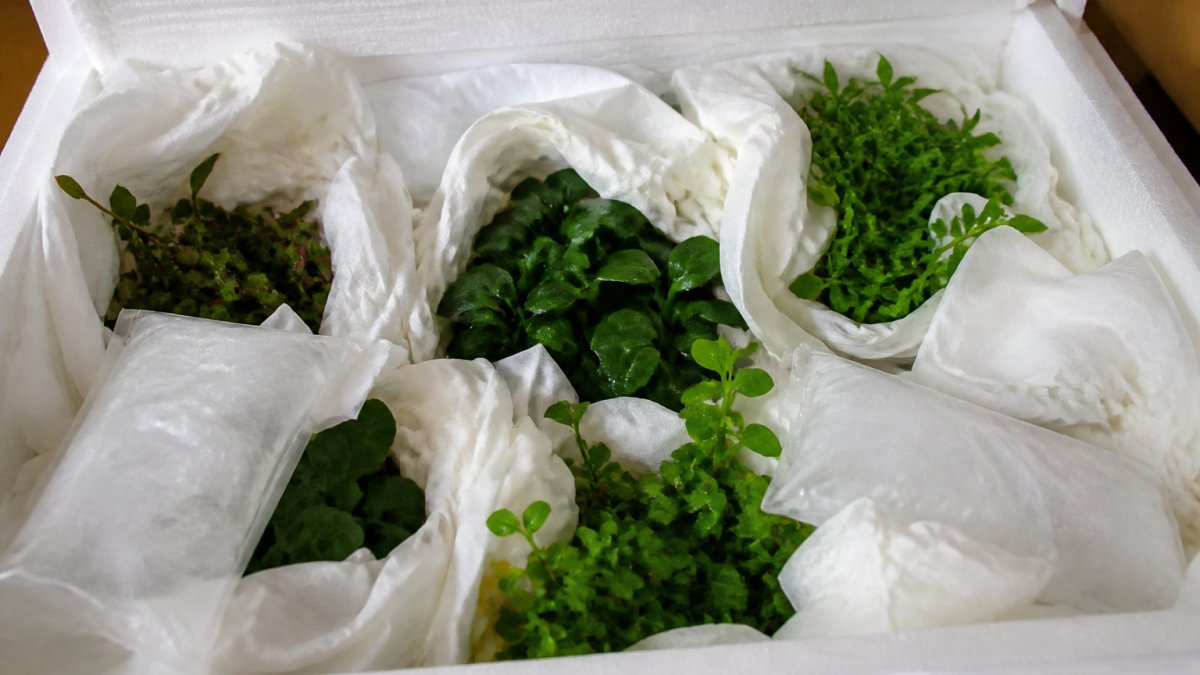
What actually kills plants in transit. Three mechanisms account for most arrival failures: temperature extremes (heat accelerates rot and algae; cold damages cell tissue), moisture loss (bare-root and emersed plants dehydrate faster than potted plants), and physical crushing (stems kink and leaves bruise when packaging shifts). A retailer's packaging is only as good as its weakest link, a great insulated box with no cold pack in July still cooks the plants.
How the two retailers differ in practice. BucePlant's packaging is functional, with seasonal cold or heat packs, but temperature management depends on season and carrier performance; during heat waves and freezes, survival rates drop, and many customers report plants that look fine on arrival but decline within a week. Canton Aquatics invests more heavily in insulated boxes, gel packs, and shipping-time selection, and customers consistently report vibrant arrivals with minimal die-off, though its smaller catalog may not have the specific rare plant you want.
The melt question. Plant melt, rapid leaf loss after submersion, is the most common post-arrival failure, and it is driven by whether the plant was grown emersed or submerged.
Live-arrival guarantees: what to check. Both retailers publish live-arrival policies, but the terms matter more than the headline.
Documenting arrival (do this every time). Photograph the sealed box, the packing materials, and each plant before you unpack it. Most guarantee claims are denied for lack of documentation, not lack of merit.
A realistic survival expectation. Even with good packaging, expect some loss on emersed-grown or rare plants, experienced buyers often plan for roughly one in ten needing replacement or extra acclimation, and order a spare of anything critical. A clear guarantee turns that expected loss into a claim instead of a sunk cost.
Best Places to Buy Aquarium Plants Online: What to Prioritize
Choosing between online aquarium plant retailers requires evaluating key factors beyond price or selection size:
Plant Quality and Acclimation: Look for retailers that explicitly state whether plants are fully transitioned to aquatic environments or still emersed-grown. Fully transitioned (submerged-grown) plants are ready to plant immediately without melt risk; they cost more but eliminate acclimation guesswork. Ohenrystanksalot focuses on fully transitioned, hardy species cultivated without CO2, so they adapt to your tank without special equipment.
Shipping Resilience: Evaluate packaging quality and climate-controlled options, and ask about the live-arrival guarantee. A retailer willing to stand behind plants with a refund or replacement policy demonstrates confidence in its shipping process.
Plant Variety and Availability: Match the catalog to your needs. Learn how to evaluate plants by placement and type to find the right species for your tank setup. Beginners benefit from proven beginner-friendly plants with detailed care guides; experienced aquascapers prioritize rare and specialty plants, including tissue culture variants and unusual stems.
Customer Support: Can you reach a real person if something goes wrong? Automated support is fine for simple questions, but personalized guidance matters when plants arrive damaged or you're troubleshooting plant health.
Value for Money: Compare pricing, but don't treat price as the only factor. A slightly higher price for plants that arrive healthy and thrive beats a discount on plants that melt within two weeks.
Online Aquarium Plant Shipping Tips for Success
Even with a quality retailer, how you handle plants after they arrive determines success. Here are proven strategies:
Inspect Upon Arrival: Open the box immediately and check for vibrant green color, firm stems, and healthy roots. Discard leaves showing rot or severe damage. If plants arrive in poor condition, document the damage with photos and contact support within 24 hours, most retailers offer replacement guarantees.
Rinse and Soak: Gently rinse plants under lukewarm water to remove gel packing material and any debris. A brief soak (5-10 minutes) in clean water helps plants rehydrate from shipping stress.
Acclimate Gradually: For emersed-grown plants, plant them in a quarantine container or low-light area of your main tank for 1-2 weeks before moving them to their final position. This reduces shock and lowers melt risk.
Avoid Immediate Replanting: Resist the urge to immediately arrange plants in their final positions. Let them settle for a few days. Plants that arrive stressed need time to recover before you subject them to replanting disruption.
Monitor Closely: Watch for melt, rapid leaf loss, stem softening, or discoloration during the first two weeks. If melt begins, remove affected leaves and keep water parameters stable. Most hardy plants recover with patience.
Check for Pests and Algae: Inspect plants for hitchhiking snails, algae spores, or other unwanted organisms before adding them to an established tank.
Which Retailer Should You Choose?
The answer depends on your priorities and experience level. Read customer reviews to see how other aquarists have experienced each retailer.
Choose BucePlant if: You're an experienced aquascaper hunting rare or specialty plants, you can handle emersed-grown plants and acclimation, you prioritize selection over hand-holding, and you're comfortable with variable shipping outcomes and occasional plant loss.
Choose Ohenrystanksalot if: You want the safest, most beginner-friendly experience with zero risk of plant melt. You need fully transitioned, no-CO2 plants that thrive immediately upon planting. You value direct access to real human support via phone.
The BucePlant vs Canton Aquatics comparison shows that both retailers serve legitimate purposes.
Buying aquarium plants online shouldn't feel like gambling with your money. The right retailer handles the hard part, ensuring plants arrive healthy and ready to thrive, so you can focus on the fun part: designing your planted tank.
Frequently Asked Questions
Is BucePlant a good brand for beginner aquascapers?
BucePlant has built a reputation for offering hardy, beginner-friendly aquatic plants with established customer service. Their selection spans stem plants, carpeting plants, and floating plants suitable for planted tanks. However, your experience depends on factors like your tank setup, water parameters, and plant acclimation practices. Before ordering from any retailer, verify they provide care instructions and live-arrival guarantees so you can address issues if plants arrive stressed.
How do BucePlant and Canton Aquatics compare on shipping and plant condition?
Both retailers ship live plants, but their approaches differ. Shipping resilience depends on packaging quality, transit time, and seasonal conditions. Plants arriving in vibrant condition with minimal damage indicate strong packaging and handling. When comparing retailers, check their policies on damaged shipments, refund timelines, and whether they offer insulated shipping during extreme weather. Ask about their packing materials, quality retailers use protective gel, cushioning, and temperature control to reduce shipping stress.
What should I check before ordering live aquarium plants online?
Verify the retailer's live-arrival guarantee and refund policy for damaged plants. Review customer recommendations and retailer reviews to assess plant quality and shipping reliability. Check plant availability and stock consistency, retailers with stable inventory tend to ship healthier specimens. Confirm care requirements match your tank setup: lighting, substrate, CO2 needs, and water parameters. Ask whether plants are tissue culture, emersed-grown, or submerged-grown, as acclimation time varies. Finally, review shipping costs and delivery timeframes, especially if you live in a climate-challenged region.
Why do aquatic plants sometimes melt after arriving from online retailers?
Plant melt occurs when fully aquatic plants experience shock from shipping stress, water parameter changes, or inadequate acclimation. Emersed-grown plants (grown in air) must transition to submerged conditions and are more prone to melting if acclimation is rushed. Quality retailers ship fully transitioned or tissue culture plants to reduce this risk. Upon arrival, rinse plants gently, soak them briefly in treated water matching your tank's pH and temperature, and plant them gradually. Stunted growth or lower leaves dropping are signs of acclimation stress, not failure, most plants recover within 2-4 weeks.
